Editorial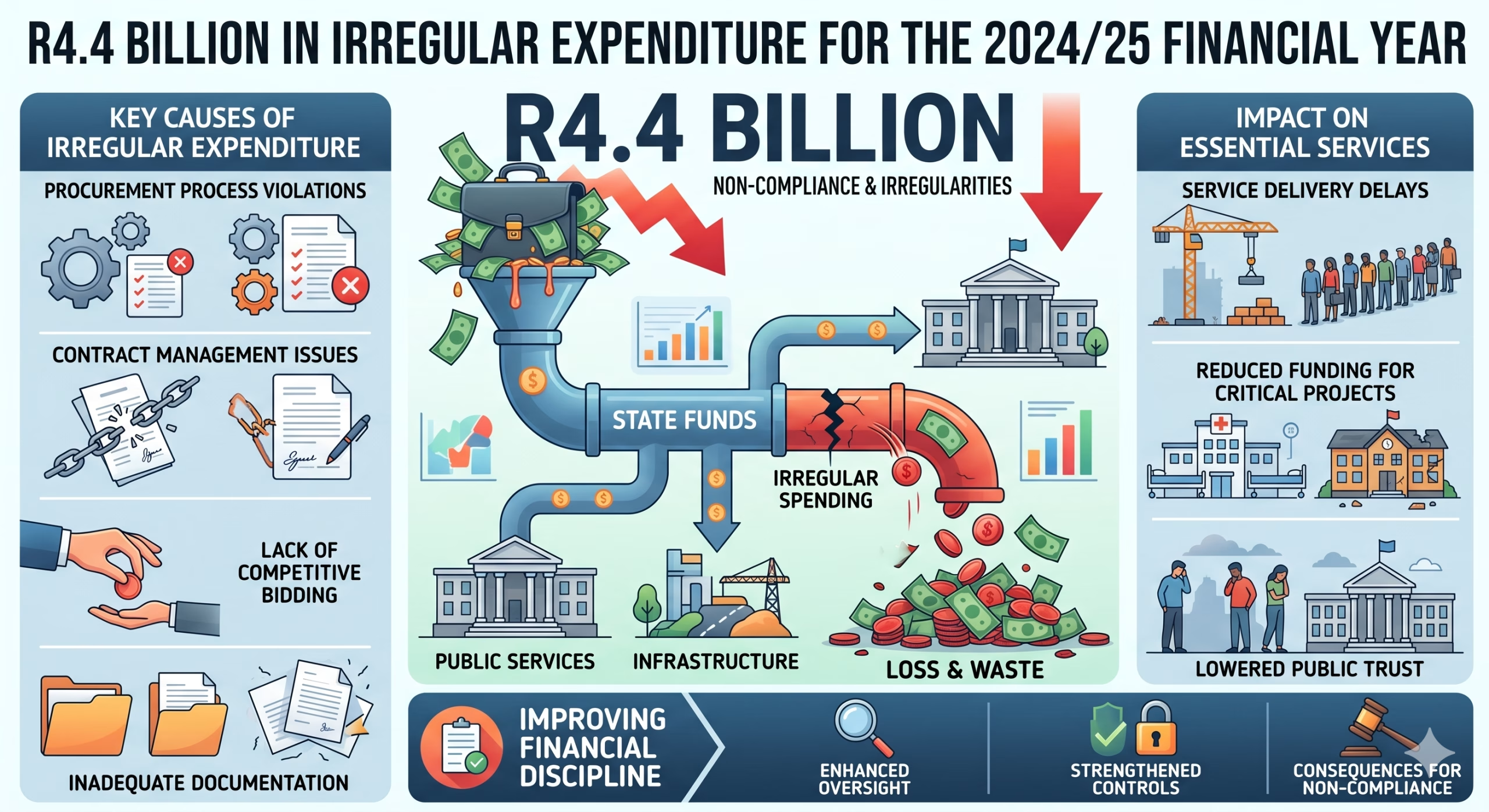
The eThekwini Municipality, home to Durban and the economic powerhouse of KwaZulu-Natal, has plunged deeper into financial chaos with irregular expenditure ballooning to a staggering R4.4 billion. This represents not just a failure of municipal governance, but a direct assault on service delivery in a metro already reeling from infrastructure collapse, water crises, and economic stagnation. For the millions of residents who call this coastal city home, the message is unmistakable: public money is being spent without proper oversight, accountability remains elusive, and the consequences are being felt in every pothole, every burst water pipe, and every uncollected refuse bin.
Irregular expenditure, it bears emphasising, is not merely a technical accounting term. It represents spending that violates the Municipal Finance Management Act, often signalling procurement processes bypassed, proper tender procedures ignored, or contracts awarded without competitive bidding. While not always proof of corruption, it creates fertile ground for it, and signals a collapse in the internal controls meant to safeguard taxpayer funds. The R4.4 billion figure — up significantly from previous financial years — is symptomatic of an administration that has lost its grip on financial discipline, if it ever had one.
A Metro in Perpetual Crisis
eThekwini’s financial woes cannot be divorced from its operational failures. The metro has faced repeated criticism over its handling of basic services. Water outages have become routine, with entire suburbs going without supply for days at a time. The city’s sewage infrastructure is collapsing into the Indian Ocean, creating both environmental and health crises. Beach closures due to E.coli contamination have become a summer ritual, hammering the tourism economy. Against this backdrop, revelations of billions in irregular spending are not just scandalous — they are enraging for residents who see little return on their rates and taxes. The question South Africans are asking is simple: where is the money going, and why are services deteriorating despite massive budgets?
This pattern of municipal dysfunction is not unique to eThekwini, but it is particularly acute here given the metro’s economic significance. As covered extensively in South African news, municipalities across the country are battling similar crises of governance, with irregular and fruitless expenditure becoming the norm rather than the exception. Yet eThekwini’s scale and importance make its failures especially consequential. The metro contributes significantly to provincial and national GDP, and its port and industrial base are critical to South Africa’s trade infrastructure. When eThekwini falters, the ripple effects are national.
The Political Dimension
The political dynamics within eThekwini have been toxic for years. The metro has been a battleground for factional wars within the African National Congress, with control over the municipality representing access to patronage, tenders, and political power. This has resulted in administrative instability, with municipal managers and senior officials rotating through positions with alarming frequency. Investigations into corruption and malfeasance have been launched and stalled repeatedly. The lack of political will to enforce consequence management has emboldened those who see public office as an opportunity for self-enrichment rather than public service.
National government has shown little appetite for decisive intervention. While the Municipal Finance Management Act provides mechanisms for provincial and national oversight, these have been applied inconsistently and ineffectively. The precedent set in other failing municipalities suggests that even when financial misconduct is documented, prosecutions are rare and political protection often shields the guilty. This culture of impunity is corrosive, not just to municipal governance, but to public trust in democratic institutions more broadly.
What This Means for Ordinary South Africans
For residents and ratepayers, the immediate impact is felt in deteriorating services and rising costs. Municipalities under financial strain inevitably turn to tariff hikes to plug budget holes, meaning residents pay more for less. Businesses face uncertainty, with unreliable water and electricity supply making long-term planning difficult. Investors, both domestic and international, factor governance risk into their decisions, and metros with reputations for mismanagement struggle to attract the capital needed for infrastructure renewal. According to Bloomberg reporting on municipal dysfunction across South Africa, the deterioration of local government capacity is one of the most significant structural impediments to economic growth and social stability.
The Path Forward
There is no quick fix for eThekwini’s governance crisis, but the starting point must be accountability. Irregular expenditure must be investigated, and where wrongdoing is found, consequences must follow — not just for junior officials, but for political leaders and senior administrators who created the enabling environment. Treasury’s role in enforcing financial compliance must be strengthened, and municipalities that persistently violate financial management legislation must face real sanctions, up to and including administration under national oversight.
Beyond punitive measures, structural reforms are essential. Procurement systems must be digitalised and made transparent, reducing opportunities for manipulation. Competitive recruitment processes for senior municipal positions must replace the current system of politically connected appointments. Civil society, ratepayer associations, and investigative journalism must be empowered to scrutinise municipal spending and hold officials to account.
The R4.4 billion in irregular expenditure at eThekwini is not just a local scandal — it is a national warning. Until South Africa confronts the rot at the municipal level with the seriousness it demands, the promise of developmental local government will remain a cruel fiction, and millions of citizens will continue to pay the price for the failures of those entrusted with their welfare.


 Phumlane Dlamini
 Beatrice Shongwe
 Siyabonga Mkabela