
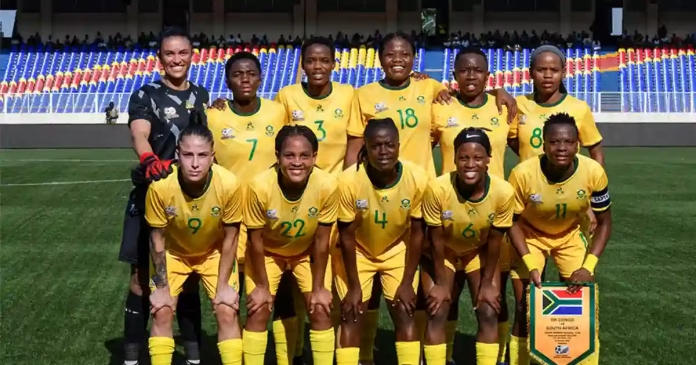
JOHANNESBURG – Banyana Banyana WAFCON preparations have entered a critical phase as head coach Desiree Ellis conducts comprehensive analysis following South Africa’s defeat to Japan, extracting valuable tactical lessons that could prove decisive in defending their Women’s Africa Cup of Nations crown. The recent international friendly, though ending in disappointment, has become an unexpected catalyst for strategic refinement ahead of the continental championship.
Ellis, who guided Banyana Banyana to their historic WAFCON triumph in 2022, has demonstrated her characteristic resilience by transforming setback into opportunity. The Japanese encounter, played against one of Asia’s football powerhouses, exposed areas requiring immediate attention while simultaneously validating several tactical approaches the team has been developing over the past eighteen months.
Tactical Analysis From the Japanese Encounter
The match against Japan provided Banyana Banyana with a rare opportunity to test themselves against opposition that operates at a distinctly different tactical frequency from African competitors. Ellis has identified several critical areas where her squad demonstrated both competence and vulnerability, insights that will inform training methodologies in the weeks preceding WAFCON.
According to post-match analysis, South Africa’s defensive structure faced sustained pressure from Japan’s fluid attacking movements, particularly in transition phases. The Asian side’s ability to rapidly shift from defensive to offensive positions highlighted areas where Banyana Banyana’s defensive compactness occasionally wavered under sustained pressure.
- Defensive transitions requiring faster reorganization when possession is lost
- Midfield pressing coordination needing synchronization improvements
- Counter-attacking speed and decision-making under pressure
- Set-piece defensive organization against varied delivery patterns
- Goalkeeper distribution contributing to build-up play effectiveness
Ellis has publicly acknowledged that facing Japan’s technical sophistication provided insights impossible to gain from continental opposition alone. The coach emphasized that while African teams possess unique strengths, exposure to different football philosophies enhances tactical flexibility – a quality that could prove invaluable during WAFCON’s knockout stages.
Strategic Adjustments for Continental Defense
The Banyana Banyana WAFCON defense strategy now incorporates specific adjustments derived from the Japan experience. Ellis has reportedly intensified focus on transition management, recognizing that teams in the tournament will likely employ rapid counter-attacks as primary offensive weapons against South Africa’s possession-oriented approach.
Training sessions at the SAFA Technical Centre in Johannesburg have shifted emphasis toward high-intensity tactical drills replicating match scenarios identified during the Japanese encounter. Physical conditioning staff have coordinated with technical coaches to ensure players can maintain tactical discipline throughout ninety-minute periods, addressing fatigue-related positioning errors observed in the friendly.
| Tactical Focus Area | Priority Level | Training Allocation (%) | Expected Improvement Timeline |
|---|---|---|---|
| Defensive Transitions | Critical | 25% | 2-3 weeks |
| Midfield Pressing Coordination | High | 20% | 3-4 weeks |
| Set-Piece Organization | High | 15% | 2 weeks |
| Counter-Attack Execution | Medium | 15% | 3-4 weeks |
| Build-Up Play Patterns | Medium | 15% | 4-5 weeks |
| Match Fitness Maintenance | Critical | 10% | Ongoing |
Ellis has also emphasized psychological preparation, recognizing that defending champions face unique pressures. Sports psychologists embedded within the national team structure are working individually with players to manage expectation-related stress and maintain focus on process-oriented goals rather than outcome fixation.
Squad Selection and Player Development Insights
The Japan friendly provided Ellis with crucial data regarding squad depth and player readiness for tournament-level competition. Several fringe players received extended minutes, allowing the coaching staff to assess their capacity to contribute meaningfully during WAFCON’s congested fixture schedule.
Emerging talents from the Hollywoodbets Super League demonstrated promising attributes, though Ellis has cautioned against premature elevation to starting positions. The coach’s measured approach reflects lessons learned during previous tournaments where inexperienced players struggled with occasion-related pressure during critical moments.
Veteran players, conversely, showcased leadership qualities and tactical understanding that Ellis considers invaluable for navigating tournament complexities. The blend of experience and youthful energy within the squad has been carefully calibrated to ensure tactical flexibility across different match scenarios expected during WAFCON.
Injury management has emerged as a priority concern following the physically demanding encounter with Japan. Medical staff are monitoring several players carrying minor complaints, implementing individualized rehabilitation protocols designed to maximize availability while minimizing recurrence risks during the tournament proper.
Continental Competition Landscape Assessment
Ellis’s preparations extend beyond internal team development to comprehensive analysis of potential WAFCON opponents. Intelligence gathered from recent continental competitions, domestic league performances, and international friendlies has informed detailed opponent profiles for likely adversaries throughout the tournament.
Nigeria, Morocco, and Zambia represent immediate concerns, each possessing distinct tactical identities requiring specialized preparation. The Super Falcons’ physical athleticism, Morocco’s technical refinement following World Cup exposure, and Zambia’s emerging talent pool all present unique challenges demanding tactical versatility from Banyana Banyana.
Ellis has emphasized that complacency represents the greatest threat to successful title defense. Despite South Africa’s superior continental record in recent years, the coach continually reminds players that tournament football’s knockout nature renders historical achievements irrelevant once competition commences.
- Nigeria’s physical approach requiring robust defensive dueling
- Morocco’s technical possession game demanding disciplined pressing
- Zambia’s counter-attacking speed necessitating defensive awareness
- Cameroon’s set-piece threat requiring organizational excellence
- Ghana’s tactical flexibility demanding adaptive game management
Infrastructure and Support Systems Enhancement
The South African Football Association has reportedly increased investment in Banyana Banyana WAFCON preparations, recognizing the tournament’s significance for women’s football development nationwide. Enhanced training facilities, expanded technical staff, and improved logistical support reflect organizational commitment to successful title defense.
Performance analysis capabilities have been substantially upgraded, with video analysis platforms enabling detailed opponent scouting and self-assessment. Data analytics specialists now provide Ellis with comprehensive statistical insights regarding opponent tendencies, player workload management, and tactical pattern recognition.
Nutritional support has been optimized following consultation with sports science experts, ensuring players maintain ideal physical condition throughout tournament preparation and competition phases. Individualized meal plans account for specific metabolic requirements and training load variations across different preparation stages.
The integration of sports science, medical expertise, and technical coaching represents a holistic approach distinguishing South Africa’s program from many continental competitors. Ellis has credited this multidisciplinary framework with enabling sustained competitive excellence despite resource constraints compared to European counterparts.
Legacy Considerations and Development Impact
Beyond immediate competitive objectives, Ellis recognizes that Banyana Banyana WAFCON performance carries significant implications for women’s football development across South Africa. The 2022 triumph catalyzed unprecedented interest in the women’s game, translating into increased participation rates, sponsorship investment, and media coverage.
Successful title defense would consolidate these gains, providing sustained momentum for grassroots development initiatives and professional league expansion. Ellis has consistently emphasized her responsibility extends beyond national team results to advancing systemic change benefiting future generations of female footballers.
The coach’s reflective approach following the Japan defeat exemplifies this broader perspective. Rather than viewing the result as isolated disappointment, Ellis has framed it as developmental opportunity – both for immediate tournament preparation and long-term program evolution.
Youth development pathways have been strengthened in parallel with senior team preparations, ensuring talent pipelines remain productive beyond current squad members’ careers. Ellis’s involvement in coaching education initiatives reflects commitment to knowledge transfer, recognizing that sustainable success requires institutional capacity rather than individual brilliance alone.
For comprehensive coverage of South African sports developments, visit our SA News section.
Path Forward and Tournament Timeline
With WAFCON approaching, Ellis has outlined a phased preparation strategy balancing intensive training with adequate recovery periods. Friendly matches against carefully selected opponents will provide final competitive tuning, testing tactical adjustments implemented following the Japan experience.
The coaching staff has established clear performance benchmarks for each preparation phase, enabling objective assessment of readiness levels. Flexibility remains embedded within planning frameworks, allowing tactical adjustments responsive to emerging information regarding opponent preparations and player condition developments.
Ellis’s experience navigating previous tournaments provides invaluable perspective during these critical weeks. Her calm demeanor and systematic approach have instilled confidence throughout the squad, transforming potential anxiety regarding title defense into focused determination to achieve continued continental dominance.
The Banyana Banyana WAFCON journey represents more than sporting competition – it embodies national pride, gender equity advancement, and developmental aspiration for millions of South African girls viewing these players as role models. Ellis shoulders these responsibilities with characteristic grace, recognizing that her tactical decisions carry implications extending far beyond match results.
As preparations intensify, South African football supporters await with anticipation, confident that lessons extracted from the Japan defeat will translate into tactical sophistication distinguishing Banyana Banyana throughout the continental championship. Ellis’s reflective leadership style, combining analytical rigor with emotional intelligence, positions South Africa favorably for successful title defense despite inevitable challenges awaiting in the tournament ahead.
Read More on Sports
https://www.neoscribe.co.za/siya-kolisi-from-a-township-in-zwide-to-the-world-stage

