
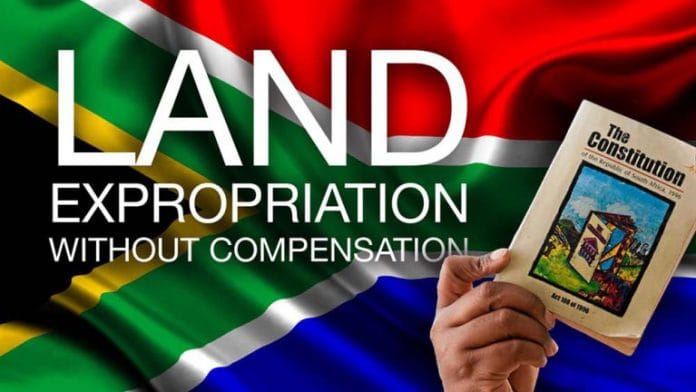
South Africa’s contentious expropriation act court challenge is taking centre stage in Johannesburg today, with landmark legal proceedings that could fundamentally reshape how government acquires land without compensation. The case represents the most significant constitutional test of the legislation since Parliament passed the Expropriation Act in 2020, which grants authorities power to expropriate property with minimal or zero compensation under specific circumstances. Industry bodies, property owners, and constitutional experts are watching closely as the courts decide whether provisions of the act align with South Africa’s Bill of Rights.
What the Expropriation Act Court Challenge Means
The expropriation act court challenge centres on several contentious clauses that critics argue violate property rights protected under Section 25 of the Constitution. The legislation, designed to accelerate land reform and state acquisition of strategic assets, has divided South Africa since its introduction. Proponents argue it’s essential for achieving redistribution goals and correcting historical injustices, while opponents contend it creates uncertainty for investors and undermines property rights fundamental to economic growth.
Key issues in today’s proceedings include:
- Whether “just and equitable” compensation can be interpreted as zero rand
- The adequacy of consultation periods before expropriation occurs
- Whether the act properly balances public interest against individual property rights
- Implications for both residential and commercial property sectors
Impact on South Africa’s Property and Investment Climate
The expropriation act court challenge has significant ramifications beyond legal circles. Real estate investors, agricultural businesses, and foreign stakeholders have expressed concern about predictability and compensation frameworks. South African property values have shown volatility partly due to expropriation uncertainty, affecting mortgage availability and development projects across major metropolitan areas including Johannesburg, Cape Town, and Durban.
The court’s decision could either bolster government’s land acquisition powers or force legislative amendments that provide stronger investor protections. Either outcome carries consequences for South Africa’s broader economic trajectory and foreign direct investment appetite. Several major developers have paused large-scale projects pending clarity on property rights protection.
Constitutional and Political Context
The expropriation act court challenge emerges amid broader political debate about land reform’s pace and methodology. President Cyril Ramaphosa’s administration views expropriation without compensation as essential for meaningful redistribution, while opposition parties and business organisations argue it requires constitutional amendment rather than enabling legislation. The Constitutional Court’s interpretation today could determine whether Parliament’s approach passes constitutional scrutiny.
This proceeding also reflects deeper tensions within South Africa’s transition framework. Twenty-nine years after democracy, land ownership patterns remain starkly unequal, with historical inequities persisting across racial and geographic lines. Yet remedying these injustices while maintaining economic stability and investor confidence presents genuine constitutional and practical challenges that courts must navigate carefully.
What’s at Stake Today
The expropriation act court challenge could yield several outcomes. The court might uphold the legislation entirely, striking down specific provisions, or declaring the entire framework unconstitutional. Any decision will likely face appeals, potentially reaching the Constitutional Court for final determination. Industry watchers suggest a ruling could emerge within weeks or months, though constitutional matters often extend timelines.
The implications extend beyond property law into questions about state power, individual rights, and democratic legitimacy. South Africa’s constitutional framework uniquely protects property while acknowledging historical injustice and land reform imperatives. Today’s court challenge forces judicial interpretation of how these competing values coexist in practice.
Follow live updates on South Africa’s legal developments through Reuters Africa coverage and consult our SA News section for ongoing analysis. International perspective on this case is available via BBC Africa reporting.

