
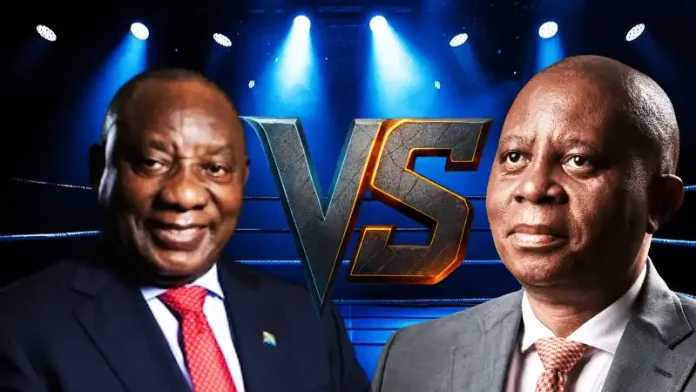
CAPE TOWN – ActionSA has launched a scathing attack on President Cyril Ramaphosa, accusing him of employing what the party terms “Stalingrad tactics” to deliberately stall parliamentary accountability processes. The ActionSA Ramaphosa Parliament confrontation marks an escalation in tensions between the executive and opposition parties concerned about constitutional governance and oversight mechanisms.
The opposition party’s allegations centre on what it describes as deliberate legal obstructionism designed to delay crucial parliamentary proceedings, raising fundamental questions about executive accountability in South Africa’s democratic framework. This latest development adds to growing concerns about the relationship between the presidency and legislative oversight bodies.
Understanding Stalingrad Tactics in Legal Context
The term “Stalingrad tactics” refers to a legal strategy involving maximum resistance, prolonged litigation, and procedural delays designed to exhaust opponents through attrition rather than merit-based arguments. Named after the prolonged World War II battle, these tactics have become controversial in South African legal circles, particularly when deployed by those in positions of power.
According to legal experts, Stalingrad tactics typically involve:
- Filing multiple interlocutory applications to delay proceedings
- Raising technical objections on procedural grounds
- Requesting numerous postponements and adjournments
- Deploying extensive legal teams to overwhelm opposition resources
- Exploiting every available legal mechanism to prolong resolution
- Escalating costs to discourage continued pursuit of accountability
ActionSA’s allegations suggest that the presidency has adopted this approach to avoid answering parliamentary questions or responding to oversight mechanisms. The party contends that such tactics undermine the constitutional principle of executive accountability to Parliament, as enshrined in South Africa’s Constitution.
ActionSA’s Specific Allegations Against Ramaphosa
The party has presented detailed accusations regarding the ActionSA Ramaphosa Parliament standoff. According to ActionSA leadership, the President’s legal teams have systematically delayed responses to parliamentary questions, particularly those relating to executive decision-making processes, appointments, and policy implementation.
ActionSA parliamentary leader Athol Trollip elaborated on the allegations, stating that the presidency has created a pattern of obstruction across multiple parliamentary mechanisms. The party claims that written questions submitted months ago remain unanswered, oral question sessions have been repeatedly postponed, and requests for documentation have been met with technical objections.
The opposition party has identified several specific instances where they allege Stalingrad tactics were employed:
| Parliamentary Mechanism | Alleged Tactic | Duration of Delay | Status |
|---|---|---|---|
| Written Questions | Failure to respond within constitutional timeframes | 3-6 months | Ongoing |
| Oral Question Sessions | Multiple postponement requests | 4 months | Rescheduled |
| Document Requests | Technical objections on classification grounds | 5 months | Disputed |
| Committee Appearances | Scheduling conflicts and substitution of officials | 2-4 months | Partially resolved |
These allegations come at a particularly sensitive time for South African democracy, as oversight mechanisms face increasing strain within the Government of National Unity framework. The complex political arrangements following the 2024 elections have already created challenges for traditional parliamentary accountability processes.
Constitutional Implications and Parliamentary Oversight
The ActionSA Ramaphosa Parliament dispute raises significant constitutional questions about the balance of power between the executive and legislative branches. Section 92(2) of the South African Constitution explicitly states that members of the Cabinet are accountable collectively and individually to Parliament for the exercise of their powers and the performance of their functions.
Constitutional law experts have weighed in on the matter, noting that deliberate obstruction of parliamentary oversight could constitute a violation of constitutional obligations. Professor Pierre de Vos, a leading constitutional scholar, has previously written about the importance of maintaining robust parliamentary accountability mechanisms to prevent executive overreach.
The Constitution provides several mechanisms for parliamentary oversight:
- Questions to the executive for oral or written reply
- Debates on matters of public interest
- Establishment of committees to investigate executive action
- Summoning of any person to give evidence or produce documents
- Powers to receive petitions and consider them
When these mechanisms are impeded through legal tactics, the fundamental separation of powers principle comes under threat. ActionSA argues that the presidency’s alleged behaviour represents a systematic attempt to place the executive beyond parliamentary scrutiny, a dangerous precedent in any democracy.
International observers have noted similar patterns in other democracies where executives have sought to limit legislative oversight, often with detrimental consequences for democratic governance and accountability.
Government of National Unity Complications
The current Government of National Unity arrangement adds layers of complexity to the ActionSA Ramaphosa Parliament confrontation. With the African National Congress, Democratic Alliance, and other parties sharing executive responsibilities, questions of accountability become more intricate.
ActionSA, which opted to remain outside the GNU framework, has positioned itself as an independent opposition voice committed to holding all parties accountable regardless of coalition arrangements. The party argues that its outsider status provides it with greater freedom to pursue accountability without the constraints of coalition politics.
However, the GNU arrangement also means that traditional opposition dynamics have shifted. Parliamentary committees now include members from multiple parties that share governing responsibilities, potentially complicating oversight functions. ActionSA contends that this makes robust opposition accountability mechanisms even more critical.
The party has called for cross-party support in confronting what it describes as executive overreach, appealing to GNU partners to uphold parliamentary supremacy regardless of coalition considerations. This approach tests the commitment of parties like the Democratic Alliance to maintaining oversight functions despite sharing executive power with the ANC.
Historical Precedents in South African Politics
The allegation of Stalingrad tactics against a sitting president is not without precedent in South African political history. Former President Jacob Zuma famously employed extensive legal strategies to delay prosecution and avoid parliamentary accountability, creating a template that critics argue has influenced subsequent political behaviour.
Zuma’s prolonged legal battles, including his challenge to the Public Protector’s State of Capture report and his resistance to parliamentary impeachment proceedings, demonstrated how legal processes could be used to forestall accountability. These tactics ultimately contributed to his resignation in 2018, though only after years of parliamentary dysfunction and public frustration.
The comparison is particularly striking given that President Ramaphosa positioned himself as an antidote to the Zuma era’s governance failures. His presidency was predicated on restoring ethical leadership, strengthening institutions, and ensuring accountability. ActionSA’s allegations therefore carry additional weight, suggesting a betrayal of these foundational commitments.
Legal analysts note that South African courts have grown increasingly hostile to Stalingrad tactics in recent years, with several judgments condemning their use and imposing cost orders against parties employing them. The Constitutional Court has repeatedly affirmed the importance of access to justice and timely resolution of disputes, principles that extend to parliamentary accountability processes.
Broader Implications for Democratic Accountability
The ActionSA Ramaphosa Parliament standoff reflects broader challenges facing democratic accountability in South Africa. As the country approaches three decades of constitutional democracy, questions about the effectiveness of oversight mechanisms have become increasingly urgent.
Parliament’s capacity to hold the executive accountable has been questioned across multiple administrations. Factors contributing to this challenge include:
- Dominant party politics reducing incentives for ANC MPs to challenge their own executive
- Limited resources for parliamentary research and investigation
- Complex technical issues requiring specialized knowledge
- Legal challenges to parliamentary authority and processes
- Political considerations sometimes overriding constitutional obligations
ActionSA’s confrontational approach represents an attempt to revitalize parliamentary oversight through persistent public pressure and legal challenges. The party has indicated its willingness to pursue judicial remedies if the presidency continues what it describes as obstructionist behaviour.
Civil society organizations have also expressed concern about declining parliamentary effectiveness. Organizations such as the Helen Suzman Foundation and the Council for the Advancement of the South African Constitution have long advocated for strengthening legislative oversight capacity and protecting parliamentary independence from executive interference.
International democracy indices have shown concerning trends in South Africa’s governance indicators, particularly regarding accountability and transparency. The ActionSA allegations, if substantiated, would represent a further deterioration in these critical democratic metrics.
Political Ramifications and Public Response
The public response to ActionSA’s allegations has been mixed, reflecting South Africa’s complex political landscape. Supporters of the opposition party have embraced the confrontational approach, viewing it as necessary pushback against executive overreach. Critics, however, question whether the allegations are substantiated or represent political theatre.
The timing of the accusations is notable, coming as South Africa grapples with multiple crises including electricity supply challenges, economic stagnation, and service delivery failures. ActionSA appears to be positioning itself as the voice of frustrated citizens demanding accountability from leadership across the political spectrum.
Social media reaction has been polarized, with hashtags related to the ActionSA Ramaphosa Parliament confrontation trending on South African Twitter. Public discourse reflects deep divisions about presidential performance, opposition tactics, and the effectiveness of current governance arrangements.
Political analysts suggest that ActionSA’s aggressive accountability posture serves strategic objectives beyond the immediate parliamentary dispute. As a relatively young party seeking to establish itself as a credible national opposition force, confronting the presidency on constitutional grounds provides visibility and demonstrates commitment to principled governance.
The coming weeks will likely determine whether ActionSA’s allegations gain traction beyond their immediate supporter base. If other opposition parties join the criticism or if civil society organizations validate the concerns, pressure on the presidency could intensify significantly.
President Ramaphosa’s response to these allegations will be closely watched. A defensive posture could lend credibility to ActionSA’s claims, while transparent engagement with parliamentary processes could defuse the situation. The presidency’s handling of this challenge will likely influence perceptions of executive accountability for the remainder of this parliamentary term.
As South Africa continues navigating the unprecedented terrain of coalition governance, the ActionSA Ramaphosa Parliament dispute serves as a reminder that foundational constitutional principles must be protected regardless of political configurations. The resolution of this confrontation will have implications far beyond the immediate parties involved, potentially shaping the future of parliamentary oversight in South African democracy.

