
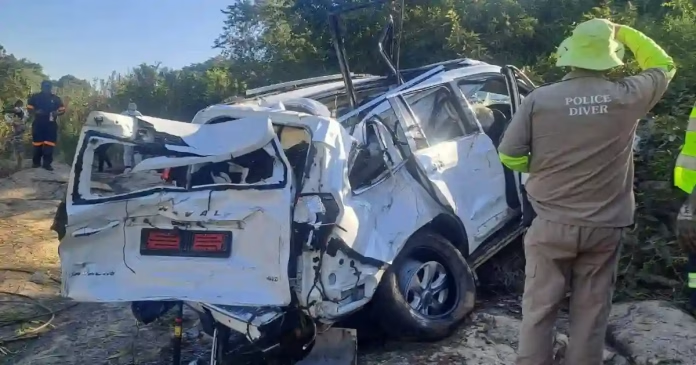
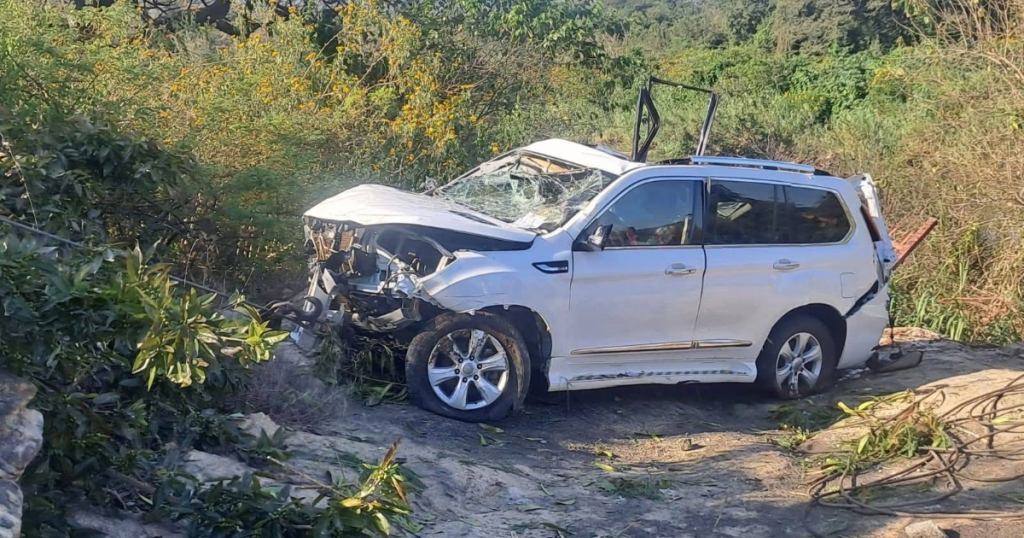
NELSPRUIT – A Crocodile River search operation has been launched after a vehicle plunged into the waterway, triggering an urgent multi-agency rescue mission involving divers, emergency services, and search-and-rescue teams across Mpumalanga province.
The incident, which occurred in the early hours of the morning, has mobilised emergency response teams from multiple agencies as they race against time to locate the occupants of the submerged vehicle. The exact number of people in the vehicle at the time of the incident remains unclear, adding to the urgency of the Crocodile River search efforts.
According to preliminary reports from emergency services, the vehicle left the road under circumstances still being investigated, plunging into the fast-flowing river known for its challenging conditions and dangerous wildlife. The Crocodile River, which flows through parts of Mpumalanga and eventually into Mozambique, presents significant challenges for rescue operations due to its unpredictable currents and murky waters.
Emergency Response Teams Mobilised
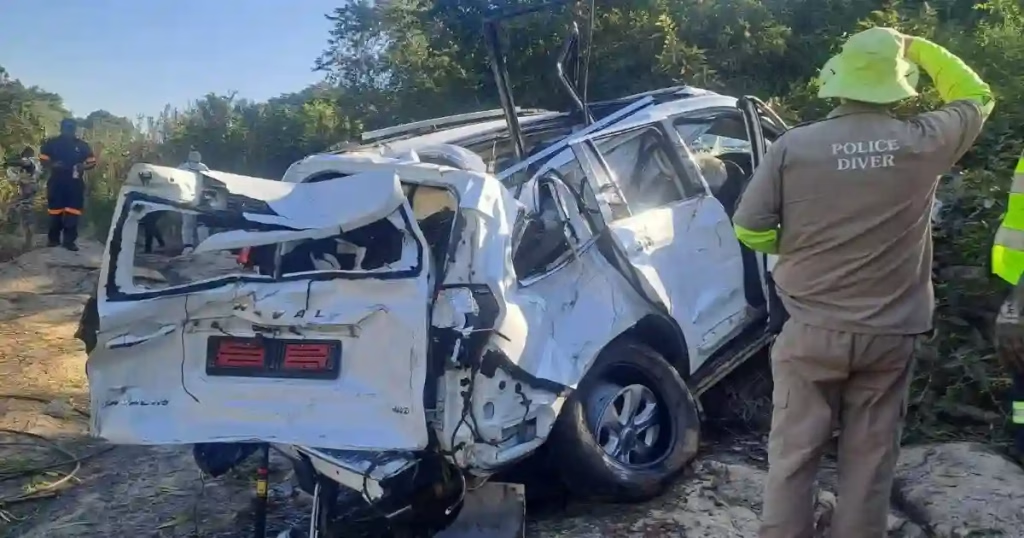
Emergency Medical Services (EMS), the South African Police Service (SAPS) Water Wing, and private search-and-rescue organisations have converged on the scene to conduct the Crocodile River search. Dive teams have been deployed despite the hazardous conditions, including poor visibility and strong currents that complicate underwater search efforts.
Provincial EMS spokesperson Sipho Khumalo confirmed the operation was underway but cautioned that conditions were making the search extremely difficult. “Our teams are doing everything possible to locate the vehicle and any occupants. We have specialist dive teams in the water, but the current is strong and visibility is very limited,” Khumalo stated in a briefing to media.
The search operation includes:
- Specialist dive teams conducting underwater searches
- Helicopter support for aerial reconnaissance
- K9 units deployed along riverbanks
- Sonar equipment to detect submerged vehicles
- Emergency medical teams on standby
- SAPS investigation units documenting the scene
Community members have also gathered along the riverbank, some offering local knowledge about the river’s behaviour and potential downstream locations where the vehicle might surface or become lodged. Such community involvement has proven invaluable in previous African rescue operations, where local expertise often guides professional teams to critical areas.
Challenges Facing Rescue Teams
The Crocodile River presents multiple hazards that complicate search-and-rescue operations. Beyond the obvious danger implied by its name – the presence of Nile crocodiles in certain stretches – the river’s characteristics pose significant operational challenges for emergency responders.
Water flow rates vary dramatically depending on recent rainfall and dam releases upstream, and current conditions suggest above-average flow rates that increase both the danger to divers and the likelihood that the vehicle has been carried downstream from the initial entry point. Visibility underwater typically ranges from zero to just a few metres, forcing divers to work largely by feel in a grid-pattern search.
| Challenge Factor | Impact on Search Operation | Mitigation Strategy |
|---|---|---|
| Strong currents | Risk to divers, vehicle displacement | Tethered dive teams, expanded search radius |
| Low visibility | Difficult to locate submerged vehicle | Sonar equipment, systematic grid search |
| Wildlife hazards | Danger to personnel | Wildlife monitors, restricted dive zones |
| Debris and obstacles | Navigation difficulties, entanglement risk | Experienced technical divers, safety protocols |
| Time sensitivity | Decreasing survival probability | 24-hour operation, multiple teams |
Dr. Thandi Mbeki, an expert in emergency water rescue operations at the University of Pretoria, explained the complexity of river rescue missions. “Unlike lake or dam searches where the vehicle typically remains near the entry point, river incidents are dynamic. The vehicle can travel significant distances underwater, especially in high-flow conditions. This expands the search area exponentially with each passing hour,” she noted.
Pattern of Vehicle-into-Water Incidents in South Africa
The Crocodile River search is unfortunately not an isolated incident in South Africa, where vehicle plunges into rivers, dams, and other water bodies occur with concerning regularity. Statistics from the Road Traffic Management Corporation indicate that water-related vehicle accidents account for a significant proportion of fatal crashes, particularly during rainy seasons and in areas with inadequate road barriers.
According to international safety research, several factors consistently contribute to vehicles leaving roadways and entering water bodies, including driver fatigue, poor visibility during adverse weather, inadequate road signage, mechanical failure, and in some cases, medical emergencies affecting the driver.
In South Africa specifically, infrastructure challenges compound these risks. Many bridges and river crossings, particularly in rural areas, lack modern safety barriers or sufficient lighting. During flood conditions, low-water bridges become especially hazardous as drivers misjudge water depth and current strength.
The South African road safety landscape reflects broader challenges facing developing nations, where infrastructure development struggles to keep pace with increasing vehicle ownership and traffic volumes. For more context on infrastructure challenges, readers can explore additional analysis in our SA News section.
Community Impact and Response
The incident has resonated deeply within the local community, where residents have expressed both concern for the missing occupants and frustration about recurring safety issues at the location. Community leader Jabu Nkosi indicated that locals had previously raised concerns about safety measures at the river crossing.
“We have been asking for better barriers and warning signs for years. This river is dangerous, especially during the rainy season. When the water is high and moving fast, it’s easy to misjudge the conditions,” Nkosi explained. “Our hearts go out to the families affected, and we’re praying the search teams find the occupants alive.”
Local churches have organised prayer vigils, while community members have been providing refreshments and support to the emergency personnel conducting the around-the-clock search operation. This community solidarity reflects the ubuntu philosophy deeply embedded in South African culture, where collective compassion manifests during times of crisis.
Social media has also played a significant role in disseminating information and coordinating volunteer efforts. However, authorities have urged caution, requesting that only verified information be shared and that untrained individuals not attempt independent rescue efforts that could endanger themselves and complicate professional operations.
Investigation and Road Safety Implications
While the immediate priority remains locating the vehicle occupants, SAPS has confirmed that a full investigation into the circumstances of the incident will be conducted. Investigators will examine multiple factors including road conditions, vehicle mechanical status, possible driver impairment, weather conditions at the time, and whether any traffic violations occurred.
The investigation will also assess whether infrastructure inadequacies contributed to the incident. The Department of Transport and the provincial roads agency will likely face questions about safety measures at the crossing, including barrier installations, warning signage, and lighting provisions.
Traffic safety expert Dr. Pieter van der Merwe emphasised the importance of comprehensive investigations. “Every incident like this provides an opportunity to identify systemic failures and implement preventative measures. We need to look beyond individual driver error and examine whether our road infrastructure adequately protects motorists, especially at high-risk locations like river crossings,” he stated.
Similar incidents across South Africa have previously prompted infrastructure improvements, including the installation of crash barriers, enhanced lighting, and automated warning systems that activate during flood conditions. However, implementation remains inconsistent, particularly in areas with limited municipal budgets.
According to regional safety analysts, South Africa’s road fatality rate remains significantly higher than developed nations, with infrastructure deficiencies cited as a contributing factor alongside driver behaviour and vehicle maintenance issues.
Lessons from Previous Water Rescue Operations
The Crocodile River search draws on experience and protocols developed through previous water rescue operations across South Africa. The country has witnessed numerous similar incidents, each contributing to refined emergency response procedures and inter-agency coordination frameworks.
Notable past incidents have highlighted both the challenges and the critical importance of rapid response. In several cases, occupants have survived for extended periods in air pockets within submerged vehicles, underscoring why search operations continue with intensity even hours after an incident. However, survival probability decreases rapidly, making the first hours absolutely critical.
Modern search-and-rescue protocols now incorporate technology including side-scan sonar, remotely operated underwater vehicles (ROVs), and thermal imaging from aircraft. These tools significantly enhance search effectiveness compared to traditional methods, though their availability varies depending on the resources of the responding agencies.
Emergency services have also improved coordination between agencies, with standardised incident command structures ensuring efficient resource deployment and avoiding duplication of efforts. The National Sea Rescue Institute (NSRI), though primarily focused on maritime incidents, has increasingly provided expertise and equipment for inland water rescues, including training for police dive units.
Family liaison officers now form a standard component of search operations, ensuring that relatives receive timely, accurate information and appropriate psychological support during the agonising wait for news. This reflects a more holistic approach to emergency management that recognises the human dimension beyond the technical search operation.
Looking Forward: Prevention and Preparedness
As the Crocodile River search continues, attention will inevitably turn to prevention strategies that could reduce the frequency of such tragic incidents. Road safety advocates argue for multi-faceted approaches that address infrastructure, driver education, enforcement, and emergency response capacity.
Specific recommendations that have emerged from previous incidents include mandatory crash barriers at all river crossings on public roads, automated depth and current monitoring systems with real-time warnings to motorists, improved road surface treatments to enhance grip in wet conditions, standardised emergency contact information prominently displayed at high-risk locations, and regular safety audits of bridges and river crossings.
Driver education also requires enhancement, particularly regarding the dangers of attempting to cross flooded roads or low-water bridges. The “Turn Around, Don’t Drown” campaign, successful in other countries, has been adopted in parts of South Africa but requires broader implementation and consistent messaging.
From an emergency response perspective, continued investment in specialist equipment and training remains essential. Not all municipalities have access to the dive teams, sonar equipment, and aerial support deployed in this Crocodile River search, creating disparities in rescue capabilities across the country.
As South Africa continues to develop its infrastructure and emergency services, incidents like this vehicle plunge serve as sobering reminders of the work still required to ensure road safety and emergency preparedness meet international standards. The immediate focus remains on the search operation and supporting affected families, but the broader lessons must inform future policy and investment decisions.
Emergency services have indicated the search will continue until the vehicle and all occupants are located. Authorities are urging anyone with information about the incident to contact the SAPS or emergency services immediately. As darkness falls, portable lighting has been deployed to enable 24-hour search operations, with teams rotating to maintain fresh personnel on scene.
The nation watches and waits, hoping for a miracle while emergency responders demonstrate the professionalism, dedication, and courage that characterise South Africa’s first responders. The Crocodile River search represents both a human tragedy and a test of emergency response capabilities, with outcomes that will resonate far beyond this single incident.

