Johannesburg – Deputy President Paul Mashatile narrowly escapes assassination after ANC NEC Meeting in Boksburg, raising public safety, SAPS, and corruption concerns.
Table of Contents
Introduction: A Nation on Edge
How safe is South Africa’s political elite — and by extension, its citizens? In a country where violent crime statistics consistently rank among the highest globally, the attempted assassination of Deputy President Paul Mashatile in March 2025 after an ANC NEC Meeting in Boksburg has sent shockwaves through the nation. The brazen attack has not only exposed alarming vulnerabilities in public security but also reopened longstanding debates around policing, corruption, and the public’s waning trust in state institutions.
The Brazen Face of Crime in South Africa Knows No Boundaries:
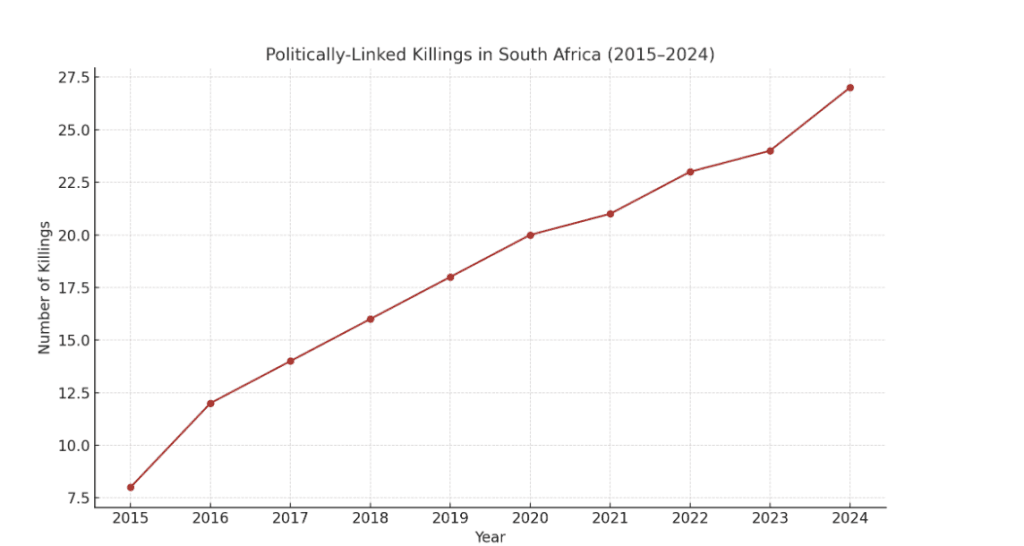
According to the 2024 South African Police Service (SAPS) crime stats, South Africa recorded over 27,000 murders in the past year, marking a 4.3% increase from 2023 — and with 20 politically-linked killings since 2019, political violence remains a chilling reality.
What Happened: The Attempted Assassination in Boksburg
Part 2: Inconsistencies in the story detailed
On March 9, 2025, Deputy President Paul Mashatile was leaving the ANC National Executive Committee (NEC) meeting at a private venue in Boksburg when a convoy of armed assailants ambushed his motorcade on the N12 highway. Multiple gunshots were fired at his official vehicle. Thanks to the quick response by the Deputy President’s security detail, Mashatile escaped unharmed, though two SAPS bodyguards sustained injuries.
Eyewitnesses reported hearing over 30 rounds of gunfire in what officials later described as a “well-coordinated and politically motivated hit.”
The ANC swiftly condemned the attack, calling it an assault on South Africa’s democracy. President Cyril Ramaphosa, addressing the nation the following evening, labeled the incident a “direct threat to our constitutional order and a symptom of criminal impunity.”
Political Backlash: Trust Erodes Further
The attempt on Mashatile’s life has reignited fierce political debates over the ANC’s factional battles, governance failures, and a national security apparatus plagued by inefficiency and corruption. Analysts suggest that rising political intolerance, factionalism within the ANC, and a state security sector riddled with internal sabotage have created a fertile ground for such attacks.
Prominent political analyst Dr. Tessa Dooms remarked on Newzroom Afrika, “This wasn’t just an isolated criminal act; it’s the violent outworking of deepening political rivalries and a reflection of a government losing control over public safety.”
How Can the Government Ensure Public Safety?
With violent crime soaring and political assassinations on the rise, South Africans are demanding answers. The government faces immense pressure to overhaul the SAPS and intelligence services.
According to Afrobarometer’s 2024 report, 72% of South Africans believe the police are corrupt, while 63% doubt their capacity to effectively fight crime.
The South African Police Service has promised increased visibility and intelligence-led operations, while President Ramaphosa has ordered a full review of VIP protection protocols. Yet, critics argue that without addressing endemic corruption and incompetence within SAPS leadership, no meaningful change is possible.
[Poll: Do you trust SAPS to keep the country safe? Yes / No / Unsure]
Known Political Assassinations Across the Country in the Last Decade
South Africa has seen a surge in political violence since 2015, predominantly at municipal and provincial levels. According to a 2023 Institute for Security Studies (ISS) report, there have been over 150 politically-linked killings in the past decade, often linked to contestations over municipal tenders, party factionalism, and power struggles.
Notable cases include:
- Sibusiso Khumalo (2018): Former ANC Youth League member gunned down in KwaZulu-Natal.
- Sindiso Magaqa (2017): Former ANCYL Secretary-General, ambushed in uMzimkhulu.
- Thulani Maseko (2023): Prominent human rights lawyer and critic, shot dead in Eswatini.
The attack on Paul Mashatile marks the highest-profile assassination attempt on a sitting Deputy President since 1994.
A 2024 Global Initiative Against Transnational Organized Crime report found that South Africa ranks among the top five countries for political assassinations globally—a chilling statistic that underscores the country’s governance crisis.
Ethical Debates: Can We Trust Public Security?
The attempted hit on Mashatile has ignited public skepticism about whether state security institutions like SAPS, the Independent Police Investigative Directorate (IPID), and the Hawks can genuinely guarantee public safety — or whether South Africa is descending into a security state reliant on private security firms.
South Africa boasts the largest private security sector in the world, with over 2.7 million registered security officers according to PSIRA (2024) — far outnumbering SAPS’ 152,000 officers. Many high-net-worth individuals and political figures increasingly rely on private firms for protection.
Critics argue this dual system of public and private policing undermines equality and entrenches class-based security.
Security expert Gareth Newham of the ISS notes, “When elites and the wealthy can buy protection while ordinary citizens wait hours for SAPS response, it erodes public trust and social cohesion.”
Should the Government Push Out Private Security?
There’s a growing ethical and policy debate over whether South Africa should regulate or even nationalize certain private security operations, as fears of a militarized private force acting outside constitutional oversight mount.
While proponents argue that private firms fill a crucial gap left by a struggling SAPS, detractors claim it’s a slippery slope toward privatized law enforcement with minimal accountability.
A recent 2024 Afrobarometer survey found 60% of South Africans would prefer private security over SAPS for personal safety, highlighting deep public distrust in official policing.
Corruption and Crime: A Country Under Siege
South Africa’s persistent battle with corruption has exacerbated its crime epidemic. From police officers implicated in organized crime to procurement scandals within state security, institutional rot undermines crime-fighting efforts.
The Zondo Commission’s final report (2022) revealed that state capture networks infiltrated the security cluster, compromising crime intelligence operations. Despite high-profile arrests, prosecutions remain slow and fragmented.
The 2024 Corruption Watch annual report recorded over 3,400 corruption cases, with 15% involving law enforcement officials.
Public Safety: A Shared Responsibility
While government reform is crucial, public safety also depends on community involvement. Several provinces have seen a resurgence of community policing forums (CPFs), neighborhood watch programs, and tech-driven solutions like crime-reporting apps and CCTV networks.
McKinsey’s 2024 global security report emphasizes that nations improving urban surveillance and community-policing integration saw a 28% drop in violent crime rates over five years.
Do You Feel Safe in South Africa?
The attempted assassination of Deputy President Paul Mashatile is a chilling reminder of South Africa’s deep-seated crisis in governance, policing, and public safety. It underscores the urgent need for systemic reform, greater police accountability, and transparent political processes.
As political violence escalates, public trust in SAPS and state security continues to wane — leaving many South Africans wondering: if a Deputy President isn’t safe, what hope do ordinary citizens have?
[Question: How safe do you feel in your neighborhood? Very Safe / Somewhat Safe / Unsafe / Very Unsafe]
South Africa stands at a crossroads, and the choices made in the coming months will define whether the country moves toward stability or descends further into lawlessness.