
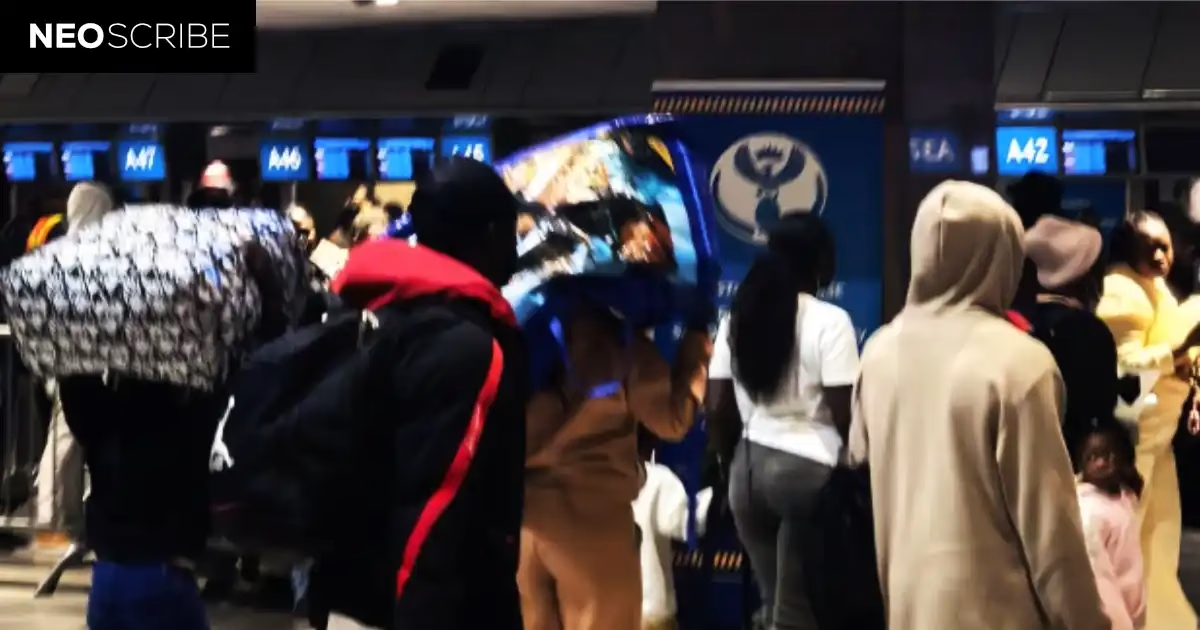
Johannesburg was the scene of a startling immigration revelation on Wednesday, 27 May 2026, as the first group of Ghanaians deported from South Africa boarded a repatriation flight at OR Tambo International Airport. Of the 300 Ghanaian nationals processed for departure, only 10 were found to be legally in the country. The remaining 290 were undocumented, had overstayed their visas, or were otherwise non-compliant with South African immigration law. The disclosure, confirmed by the Department of Home Affairs, has reignited a fierce national debate about undocumented migration and the state of South Africa’s border management.
Ghanaians Deported From South Africa: What Home Affairs Found
Home Affairs’ Immigration and Law Enforcement Head Stephen van Neel confirmed to SABC that of the 300 individuals screened before departure, only 10 were found to be legally in the country. The majority were undocumented, had overstayed their visas, or had violated South African immigration laws.
Van Neel was unambiguous about consequences. An immigration official stated that enforcement actions, including sanctions, would be applied to those who had violated the law. “We obviously have to make sure that certain sanctions are enforced,” the official said in an interview with eNCA. Under South Africa’s Immigration Act, individuals who overstay their visas face a ban from re-entering the country, a penalty that could affect the majority of Wednesday’s departing group for years to come.
Key facts about the repatriation:
- Only 10 of the 300 Ghanaians processed at OR Tambo held valid legal status in South Africa
- 290 were undocumented, overstayed, or non-compliant with immigration legislation
- 30 of those on the flight had been held at the Lindela Repatriation Centre in Krugersdorp
- Over 800 Ghanaians in total registered for voluntary repatriation
- A second repatriation flight is scheduled for Sunday, 1 June 2026
- Those turned away for paperwork issues may board the second flight
Ghana’s High Commissioner Contradicted by the Numbers
The immigration findings put Ghana’s own diplomatic representatives in an uncomfortable position. Ghana’s High Commissioner Benjamin Anani Quashie had indicated before the flight that all those who registered for voluntary return were in South Africa legally. The findings directly contradicted this assurance, triggering fresh scrutiny of how Ghana communicated with its diaspora about their immigration status.
Quashie had confirmed that more than 800 Ghanaians registered for voluntary repatriation and said many chose to leave despite not being directly attacked, citing safety concerns. “The responsibility of any government is towards its citizens,” he said. “While we have excellent relations with South Africa, we had no option but to ensure that our citizens are safe.”
That framing, while understandable from a diplomatic standpoint, now appears to gloss over a significant reality: the majority of those leaving were, by South Africa’s own law, not entitled to be here in the first place.
A Logistical Crisis at OR Tambo: Delays and Lindela Detainees
The repatriation process was far from smooth. The flight was delayed from its scheduled 4am departure as officials worked through the night verifying documents and cross-checking names against Home Affairs systems. Some Ghanaians were turned away because their papers were not in order and will be given the opportunity to travel on a second repatriation flight on Sunday. Van Neel said the department hoped to have the next list verified by Saturday to avoid a repeat of Wednesday’s delays. Thirty of those on Wednesday’s flight had been held at the Lindela Repatriation Centre in Krugersdorp before departure.
Lindela, South Africa’s only designated holding facility for undocumented migrants awaiting deportation, has long been a flashpoint in debates about how the country treats foreign nationals. The presence of detainees from Lindela among the repatriates underlines that this was not merely a voluntary departure for all involved.
| Category | Number |
|---|---|
| Total processed at OR Tambo | 300 |
| Found legally in South Africa | 10 |
| Undocumented or non-compliant | 290 |
| Held at Lindela before departure | 30 |
| Total registered for repatriation | 800+ |
| Second flight (planned) | Sunday, 1 June 2026 |
The Anti-Immigration Wave Behind the Repatriation
The voluntary repatriation did not occur in a vacuum. South Africa has seen a renewed wave of anti-illegal immigration mobilisation, with the group March and March organising demonstrations in Johannesburg, Pretoria, and Durban calling for tougher action against undocumented foreign nationals. Some of those protests resulted in the intimidation of both legal and illegal foreign nationals, and outright attacks.
A viral video showing the alleged assault of a Ghanaian man triggered outrage as it circulated widely on social media. The backlash prompted Ghana’s government to act swiftly. Ghana’s Foreign Minister Samuel Okudzeto Ablakwa announced the repatriation plan, with the Ghanaian government offering transport assistance, reintegration allowances, psychosocial support, and access to job and start-up databases for returnees.
The broader xenophobia problem in South Africa, documented extensively by Human Rights Watch, remains a structural challenge the government has yet to resolve despite years of pledges.
What This Means for South Africa’s Immigration Policy
The revelation that 97% of the Ghanaians in Wednesday’s group were undocumented lends ammunition to those who argue South Africa has fundamentally lost control of its borders. The anti-illegal-migration group March and March has called a national shutdown for 30 June 2026, demanding stricter visa rules, a review of asylum policies, and restrictions on public services for undocumented foreign nationals.
South Africa’s Minister of Justice and Constitutional Development, Mmamoloko Kubayi, said immigration reforms are underway, including proposals to process asylum applications at border posts to prevent undocumented entry into communities while cases are assessed.
The government’s challenge is a difficult one: it must address legitimate public anger over undocumented migration without fuelling the xenophobic violence that has already damaged South Africa’s reputation across the continent. South Africa’s Department of Home Affairs will need to demonstrate that enforcement measures announced at OR Tambo are followed through consistently, not only when cameras are rolling during high-profile repatriation events.
For a deeper look at South Africa’s broader immigration enforcement challenges and the ongoing pressures on the country’s asylum system, readers can explore related reporting on undocumented migration and border security in South Africa.

