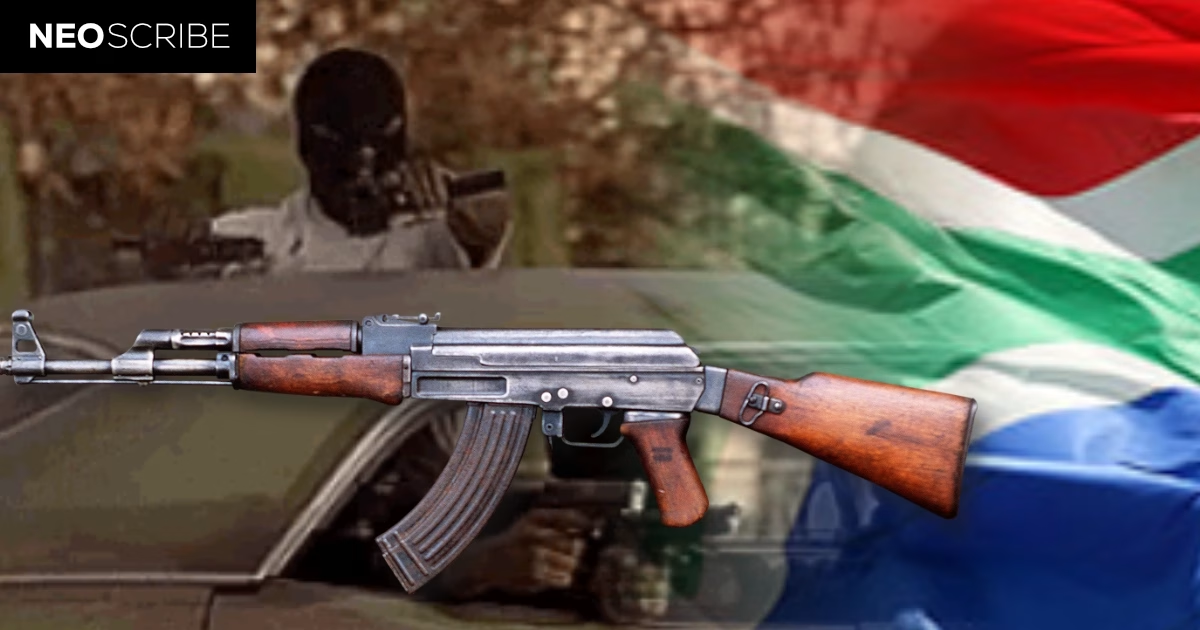
Another South African has been gunned down with military-grade weaponry in what authorities describe as a drive-by style execution in KwaZulu-Natal, underscoring a disturbing reality that should alarm every citizen: automatic rifles designed for warfare are now commonplace tools in our country’s spiralling violent crime crisis. The incident, which follows a well-established pattern of brazen assassinations across the province, raises urgent questions about state capacity, border security, and whether South Africa has lost control of its illegal firearms market.
The Execution in KwaZulu-Natal
Details emerging from KwaZulu-Natal paint a chillingly familiar picture. A man was killed in broad daylight, targeted by assailants wielding an AK-47 assault rifle in a drive-by shooting that suggests premeditation and professional execution. While police investigations continue, the use of such firepower indicates this was no opportunistic crime but rather a calculated hit—whether linked to taxi violence, political rivalry, construction tender disputes, or organised crime networks that have embedded themselves deep within KZN’s social fabric.
KwaZulu-Natal has become South Africa’s epicentre for this particular brand of violence. The province routinely records the highest murder rates nationally, and the frequency with which AK-47s appear in crime scenes has transformed what should be exceptional into routine. For residents of townships, informal settlements, and even suburban areas, the sound of automatic gunfire has become a grim soundtrack to daily life. This normalisation of military-grade violence represents a profound failure of state security apparatus and border control.
AK-47s: The Weapon of Choice in SA’s Crime Epidemic
The AK-47’s prevalence in South African crime is not accidental. This Soviet-designed assault rifle, capable of firing 600 rounds per minute, has become the weapon of choice for hit men, cash-in-transit robbers, and gang enforcers precisely because of its availability, reliability, and devastating firepower. Unlike handguns, the AK-47 sends an unmistakable message: this is not mere criminality but organised, militarised violence that operates with near-impunity.
Statistics from the South African Police Service reveal that thousands of illegal automatic rifles circulate within our borders, many originating from conflict zones in Mozambique, Zimbabwe, and other regional hotspots where firearms leak from war zones into criminal networks. The weapon used in this latest KZN killing likely followed a well-worn path: smuggled across porous borders, sold through underground arms dealers, and deployed with the confidence that detection and prosecution remain unlikely. According to research by gun violence prevention organisations, South Africa’s gun violence crisis is fuelled by both illegal weapons and inadequate controls over legal firearms.
Why Military-Grade Firearms Flood Our Streets
The saturation of AK-47s in South African crime reflects multiple systemic failures. Border security remains woefully inadequate, with under-resourced customs officials unable to effectively monitor the thousands of kilometres of land borders we share with neighbours. Corruption within police and customs services creates channels through which weapons flow freely. And insufficient intelligence capacity means that arms trafficking networks operate with sophisticated logistics while law enforcement struggles to keep pace.
But there’s also a demand-side explanation. South Africa’s epidemic of political assassinations, particularly in KZN where over 80 politicians have been killed since 2011—creates a market for untraceable, high-powered weapons. Taxi association wars, which have claimed hundreds of lives, drive similar demand. Construction mafias competing for tenders in government infrastructure projects employ armed enforcers. Each of these parallel economies of violence requires firepower, and the AK-47 delivers.
The weapon’s symbolic value cannot be ignored either. In a society where state authority is visibly weakening and where disputes are increasingly settled through violence rather than legal processes, possessing military-grade weaponry conveys power and inspires fear. This is particularly true in areas where police response times stretch to hours or where stations lack basic resources. For the latest developments in safety and security matters, visit our South African news section.
What This Means for Safety and State Capacity
This latest killing should be read as a symptom of state deterioration that extends far beyond one tragic death. When military assault rifles become routine tools of South African crime, we must confront uncomfortable truths about governance, sovereignty, and social order. The state’s monopoly on legitimate violence—a cornerstone of functional democracy—is being challenged not by revolutionary movements but by criminal networks that operate with greater efficiency than many government departments.
For ordinary South Africans, the implications are profound. Insurance premiums rise. Business investment hesitates. Talented professionals emigrate. Property values in violence-affected areas collapse. Tourism, crucial to our economy, suffers reputational damage when visitors read about automatic weapon attacks. The social fabric frays as communities lose faith in institutions meant to protect them.
The solution requires integrated action across multiple fronts: genuinely securing borders through technology and personnel investment, rooting out corruption in police and customs services, implementing intelligence-led policing that dismantles trafficking networks rather than merely responding to individual crimes, and addressing the political economy of violence by investigating who benefits from instability in sectors like taxi transport and construction.
Until South African authorities demonstrate the political will and operational capacity to tackle the AK-47 crisis with the urgency it demands, more families will bury loved ones killed by weapons that should never have reached civilian hands. This KZN killing is not an isolated incident but a preview of our future unless we acknowledge that we are losing control of violence in this country. The question is whether our leadership will respond before military-grade firepower becomes so entrenched that reversal becomes impossible.