
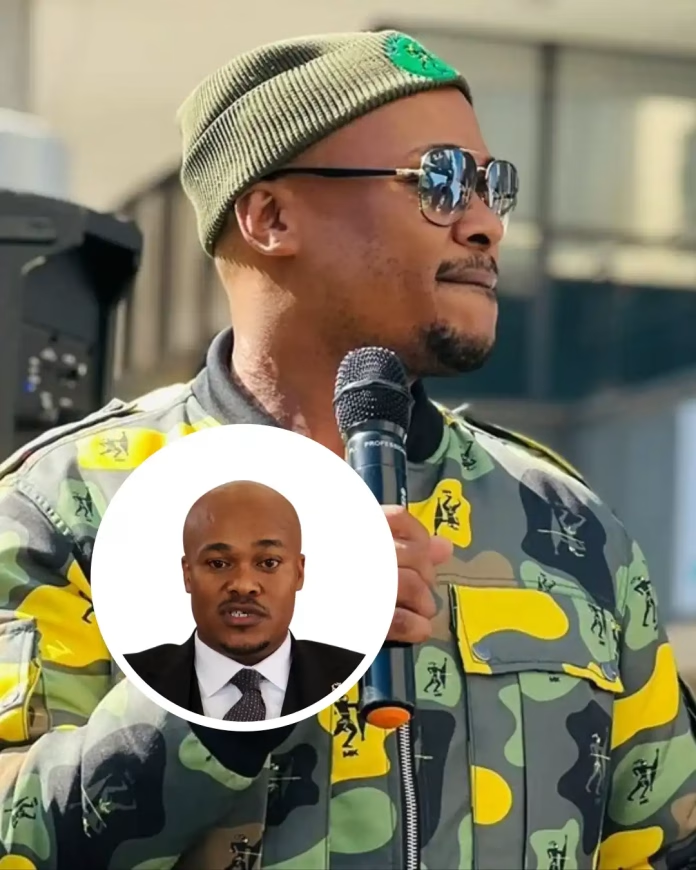
CAPE TOWN – Parliament mourns MKP MP Muzikayise Ntshingila following confirmation of the legislator’s passing, with South Africa’s National Assembly united in grief over the loss of a representative from the uMkhonto weSizwe Party. The announcement has sent shockwaves through the political establishment, particularly within KwaZulu-Natal’s political circles where Ntshingila maintained a significant constituency presence.
Table of Contents
The South African Parliament confirmed the passing of the MKP Member of Parliament, triggering an outpouring of condolences from across the political spectrum. As the third-largest party in the National Assembly following the 2024 general elections, the uMkhonto weSizwe Party faces this loss during a critical period of coalition politics and legislative activity.
Political Career and Parliamentary Contributions
Muzikayise Ntshingila represented the uMkhonto weSizwe Party in the National Assembly, having been elected during the watershed 2024 general elections that saw former President Jacob Zuma’s new political formation secure 58 seats in Parliament. His role as a parliamentarian focused primarily on issues affecting KwaZulu-Natal constituents, including rural development, traditional leadership matters, and economic transformation.
The MKP MP’s parliamentary tenure, though brief, was marked by active participation in committee work and plenary sessions. Colleagues describe Ntshingila as a dedicated public representative who maintained close ties with grassroots communities, regularly conducting constituency outreach programmes throughout KwaZulu-Natal province.
According to Reuters Africa coverage, the uMkhonto weSizwe Party has become a significant force in South African politics, particularly in KwaZulu-Natal where it commands substantial electoral support. Ntshingila’s passing represents not only a personal loss to his family and colleagues but also a political setback for the party’s parliamentary caucus.
Parliamentary Response and National Mourning
Speaker of the National Assembly Thoko Didiza expressed condolences on behalf of Parliament, acknowledging Ntshingila’s service to the nation. The parliamentary precinct has been observing appropriate mourning protocols, with flags expected to fly at half-mast in accordance with parliamentary tradition for deceased members.
Political parties across the ideological spectrum have issued statements of sympathy:
- The African National Congress extended condolences to the MKP and Ntshingila’s family, recognising his commitment to public service
- The Democratic Alliance acknowledged the loss to Parliament and expressed solidarity with grieving colleagues
- The Economic Freedom Fighters paid tribute to a fellow parliamentarian who shared their commitment to economic transformation
- The Inkatha Freedom Party, a KwaZulu-Natal rival, set aside political differences to honour Ntshingila’s memory
- Smaller parties including ActionSA, the Patriotic Alliance, and GOOD Party joined in expressing condolences
Parliament mourns MKP MP Ntshingila alongside traditional leadership structures in KwaZulu-Natal, where he maintained strong connections with Amakhosi and community elders. The intersection of traditional and parliamentary politics in his work exemplified the complex governance landscape of contemporary South Africa.
For more coverage on South African political developments, visit NeoScribe’s SA News section. The broader climate of MKP political killings and election violence fears provides critical context for understanding the risks facing the party’s members and representatives.
uMkhonto weSizwe Party Parliamentary Representation
The loss of Muzikayise Ntshingila reduces the MKP’s parliamentary caucus at a crucial juncture in South African politics. The party, established in late 2023 and formally launched ahead of the 2024 elections, has positioned itself as a radical voice for economic transformation and constitutional reform.
| Political Party | National Assembly Seats | Percentage of Vote 2024 | Primary Support Base |
|---|---|---|---|
| African National Congress | 159 | 40.18% | National |
| Democratic Alliance | 87 | 21.81% | Western Cape, Urban Areas |
| uMkhonto weSizwe Party | 58 | 14.58% | KwaZulu-Natal |
| Economic Freedom Fighters | 39 | 9.52% | Gauteng, Limpopo |
| Inkatha Freedom Party | 17 | 3.85% | KwaZulu-Natal |
The MKP’s 58 parliamentary seats make it a critical player in South Africa’s fragmented legislative landscape. Following the 2024 elections, no party achieved an outright majority, necessitating coalition arrangements and inter-party cooperation on legislative matters. Ntshingila’s vote and voice in parliamentary proceedings will be missed as the party navigates complex political negotiations.
Parliamentary rules provide for the replacement of deceased members through the party list system. The MKP’s national leadership will nominate a successor from their electoral list to fill the vacant seat, ensuring continued representation for constituents.
KwaZulu-Natal Political Landscape and Impact
KwaZulu-Natal remains South Africa’s most politically competitive province, where the uMkhonto weSizwe Party achieved its strongest electoral performance in 2024. The province witnessed significant political realignment as traditional ANC supporters shifted allegiance to Jacob Zuma’s new formation, reshaping the regional political map.
Ntshingila’s constituency work in KwaZulu-Natal addressed pressing provincial challenges including:
- High unemployment rates, particularly among youth in rural areas
- Infrastructure deficits affecting service delivery in traditional authority areas
- Land reform and restitution claims affecting communities across the province
- Educational access and quality in underserved districts
- Healthcare facility capacity and accessibility in rural regions
- Economic development opportunities for small-scale farmers and entrepreneurs
According to BBC Africa reporting, KwaZulu-Natal’s political dynamics have profound implications for national governance. The province’s electoral outcomes significantly influence coalition mathematics in both provincial and national legislatures.
Traditional leadership structures in KwaZulu-Natal have expressed condolences, recognising Ntshingila’s respectful engagement with customary governance systems. His ability to bridge parliamentary democracy and traditional authority represented valuable political capital in a province where both systems coexist and sometimes compete.
Parliamentary Procedures Following Member Deaths
South African parliamentary tradition mandates specific protocols following the death of a sitting member. Parliament mourns MKP MP Ntshingila through established procedures that honour deceased legislators while ensuring continuity of democratic representation.
The National Assembly follows these customary practices:
- Official announcement by the Speaker during a plenary session
- Observation of a moment of silence in the House
- Opportunity for party leaders to deliver tribute statements
- Flying of flags at half-mast on parliamentary precinct
- Possible attendance at funeral proceedings by parliamentary delegation
- Permanent recording in parliamentary records and archives
The Electoral Commission of South Africa will be notified of the vacancy, triggering administrative processes for seat replacement. Unlike by-elections for constituency-based systems, South Africa’s proportional representation model allows parties to nominate successors from their submitted candidate lists.
This system ensures minimal disruption to parliamentary business while maintaining party representation proportional to electoral outcomes. The MKP will likely announce Ntshingila’s replacement within weeks, allowing the new member to assume committee assignments and parliamentary responsibilities.
Legacy and Future Implications for MKP
Muzikayise Ntshingila’s contribution to South African parliamentary democracy, though cut short, reflects the dedication of public representatives serving in the National Assembly. His passing prompts reflection on the personal sacrifices made by elected officials and the human cost of political service.
The uMkhonto weSizwe Party faces the challenge of maintaining momentum following this loss. As a relatively new political formation, the party relies heavily on individual members to build institutional knowledge and parliamentary expertise. Experienced parliamentarians become increasingly valuable as the party establishes its legislative identity and policy positions.
Political analysts note that Parliament mourns MKP MP Ntshingila during a sensitive period for the party, which continues navigating relationships with other political formations. The MKP’s decision to remain outside the Government of National Unity formed after the 2024 elections positions it as an opposition voice, requiring skilled parliamentarians to effectively challenge government policy and propose alternatives.
According to Al Jazeera’s Africa coverage, South Africa’s coalition politics demand sophisticated parliamentary tactics and negotiation skills. The loss of any experienced member affects a party’s capacity to influence legislative outcomes and shape national policy debates.
Broader Context of Political Mortality in South Africa
The death of serving parliamentarians, while tragic, occurs periodically in democratic systems worldwide. South Africa’s Parliament has mourned numerous members throughout the democratic era, with each loss prompting reflection on political legacy and continuity of representation.
Recent years have seen South African politics affected by the passing of several prominent figures, including ministers, members of provincial legislatures, and local government councillors. These losses underscore the human dimension of political life, often obscured by partisan competition and policy debates.
For the MKP, Ntshingila’s passing represents an early test of institutional resilience. Political parties must balance grief and mourning with the practical necessity of continued parliamentary function. The manner in which the party manages this transition will signal its organisational maturity and capacity for effective governance.
KwaZulu-Natal communities that Ntshingila represented will seek assurance that their interests remain championed in national legislative debates. The successor appointed to fill his seat inherits both opportunity and responsibility – continuing advocacy for constituents while honouring the legacy of a fallen colleague.
As Parliament mourns MKP MP Muzikayise Ntshingila, South Africa’s democratic institutions demonstrate their capacity for continuity amid loss. The tributes, protocols, and replacement processes reflect a maturing democracy that honours individual service while maintaining collective governance. For the uMkhonto weSizwe Party, colleagues, and constituents, the challenge ahead involves transforming grief into renewed commitment to the public service ideals that motivated Ntshingila’s parliamentary work.
The coming weeks will see formal memorial services, parliamentary tributes, and the introduction of Ntshingila’s successor to the National Assembly. These rituals of democratic transition, repeated throughout South Africa’s parliamentary history, affirm the principle that while individual representatives may pass, the work of democratic representation continues in service to the nation.

