
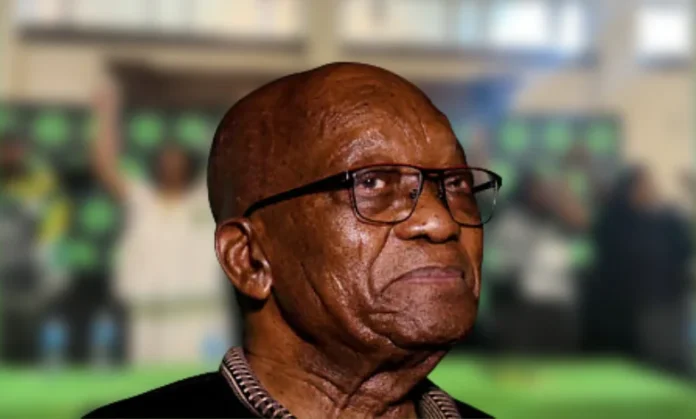
JOHANNESBURG — The uMkhonto weSizwe Party (MKP) has raised urgent alarm bells about potential MKP political killings and broader political violence as South Africa approaches crucial electoral contests, reigniting concerns about the country’s deteriorating political security landscape that has claimed dozens of lives in recent years.
The party’s warning comes against a backdrop of persistent political assassinations, particularly concentrated in KwaZulu-Natal province, where political rivalry has repeatedly turned deadly. With South Africa’s political environment becoming increasingly fragmented and competitive, fears are mounting that the country’s democratic processes are being undermined by systematic violence targeting political figures, party members, and activists.
Historical Context of Political Violence in South Africa
South Africa has grappled with MKP political killings and broader political violence for decades, a phenomenon that intensified significantly during the transition from apartheid and has resurged with alarming frequency in recent years. The democratic era has witnessed numerous political assassinations, particularly in KwaZulu-Natal, where fierce competition for political power and control over municipal resources has created a deadly environment.
According to research from the BBC, more than 90 political figures were murdered in KwaZulu-Natal between 2011 and 2021, with many cases remaining unsolved. These killings have typically targeted councilors, party officials, and community activists, creating a climate of fear that undermines democratic participation and governance.
The pattern of political assassinations follows a disturbing trajectory:
- Targeted killings of councillors and municipal officials, often linked to tender disputes and resource allocation
- Assassinations of party members ahead of candidate selection processes for local and provincial elections
- Murders of community activists who challenge corruption or expose malfeasance
- Elimination of political rivals during intense factional battles within and between parties
- Intimidation campaigns that extend to family members and associates of political figures
The emergence of the MKP as a significant political force under former President Jacob Zuma’s leadership has added new dimensions to South Africa’s already complex political landscape. The party’s rapid growth and its appeal to disaffected voters, particularly in KwaZulu-Natal, has intensified competition for political dominance in the region.
Current Security Concerns and Specific Threats
The MKP’s expression of concern about potential MKP political killings reflects both the party’s awareness of the historical patterns of political violence and specific intelligence or incidents that have prompted heightened vigilance. Political parties operating in South Africa’s most contested regions have increasingly adopted security protocols, hired private protection services, and limited public appearances by key figures.
The concerns raised by the MKP are not isolated. Multiple political parties across South Africa’s spectrum have reported threats, intimidation, and violent incidents targeting their members and supporters. The African National Congress (ANC), Democratic Alliance (DA), Economic Freedom Fighters (EFF), and Inkatha Freedom Party (IFP) have all experienced losses of members to political violence in recent years.
| Period | Reported Political Killings | Primary Province | Conviction Rate |
|---|---|---|---|
| 2016-2018 | 45 | KwaZulu-Natal | 12% |
| 2019-2021 | 37 | KwaZulu-Natal | 15% |
| 2022-2024 | 28 | KwaZulu-Natal/Eastern Cape | 18% |
According to Al Jazeera, the low conviction rate for political killings in South Africa creates an environment of impunity that encourages further violence. Investigators face significant challenges including witness intimidation, destruction of evidence, and complex criminal networks that often involve both political and criminal elements.
Underlying Factors Driving Political Violence
The persistence of MKP political killings and political violence more broadly stems from multiple interconnected factors that have created a toxic environment where assassination becomes a tool of political competition. Understanding these underlying drivers is essential for developing effective interventions to protect democratic processes and political participants.
Economic factors play a central role in fueling political violence. In a country with unemployment above 32% and widespread poverty, access to political office represents not just influence but economic survival for many communities. Municipal positions provide access to tenders, hiring decisions, and resource allocation that can benefit entire networks of families and supporters. This high-stakes competition transforms political contests into life-and-death struggles.
The tender system in South African municipalities has become particularly problematic. Reuters has documented how construction, waste management, and service delivery contracts worth millions of rands become prizes that motivate extreme measures to secure or maintain political control. Councillors who interfere with established patronage networks or who attempt to clean up corrupt practices frequently become targets.
Key factors contributing to the violence include:
- Resource scarcity: Limited economic opportunities make political office one of the few pathways to economic security in many communities
- Weak institutional capacity: Police services and criminal justice systems struggle to investigate complex political crimes effectively
- Factional warfare: Internal party conflicts over candidate selection and leadership positions turn violent
- Criminal infiltration: Organized crime networks have penetrated political structures, using violence to protect illegal enterprises
- Impunity culture: Low conviction rates signal that political killings carry minimal risk for perpetrators
- Traditional power structures: Conflicts over traditional leadership and land in rural areas intersect with formal political competition
The fragmentation of South Africa’s political landscape has intensified these dynamics. Where the ANC once dominated, creating relatively stable (if sometimes corrupt) political hierarchies, the emergence of multiple competitive parties has multiplied the number of contested positions and amplified tensions.
Regional Variations and Hotspots
While concerns about MKP political killings focus attention on the party’s strongholds, political violence manifests differently across South Africa’s diverse regions. KwaZulu-Natal remains the epicentre of political assassinations, accounting for more than 60% of reported cases nationally, but other provinces have experienced increasing incidents.
In KwaZulu-Natal, the violence is characterized by professional hit-style killings, often involving multiple gunmen and careful planning. Victims are typically ambushed at their homes, during commutes, or at community events. The sophistication of these operations suggests involvement of individuals with security or military training, and investigations have occasionally uncovered links between political figures and security personnel or former combatants.
The Eastern Cape has seen a different pattern, with political violence often emerging from conflicts over traditional leadership, land disputes, and local government dysfunction. Rural municipalities in the former Transkei region have experienced violent contestation over councillor positions, with some communities effectively becoming ungovernable due to intimidation and fear.
Gauteng, South Africa’s economic heartland, has experienced politically motivated violence linked to control over lucrative urban municipalities and the informal economy. Taxi associations, which have substantial political influence, have been involved in conflicts that blur the lines between political and economic violence.
For more context on South Africa’s political landscape, readers can explore additional analysis at NeoScribe’s SA News section. The human cost of MKP political activity was also felt when Parliament mourned the passing of MKP MP Muzikayise Ntshingila, a reminder that political service in South Africa carries profound personal risk.
Response from State Institutions and Civil Society
The MKP’s warning about potential MKP political killings places renewed pressure on South Africa’s security and justice institutions to demonstrate capacity and commitment to protecting democratic processes. The response from state institutions has been inconsistent, with some high-profile task forces achieving limited success while systemic problems remain unaddressed.
The South African Police Service established a dedicated unit to investigate political killings in KwaZulu-Natal in 2018, following sustained public pressure and civil society advocacy. This unit has achieved some successes, securing convictions in several high-profile cases and disrupting some criminal networks involved in political violence. However, resource constraints, capacity limitations, and ongoing corruption within police ranks have limited the unit’s effectiveness.
The National Prosecuting Authority has similarly struggled to build successful cases in political killing investigations. The complexity of these cases—often involving multiple conspirators, professional hitmen, and politically connected masterminds—requires sophisticated investigative techniques, witness protection, and sustained focus. Budget limitations and high staff turnover have undermined these efforts.
According to Bloomberg, civil society organizations and independent researchers have played crucial roles in documenting political violence, supporting affected families, and advocating for justice. Groups like the Independent Electoral Commission, civil rights organizations, and academic institutions have produced important research that has shaped public understanding and policy responses.
Implications for Electoral Integrity and Democracy
The concerns raised about MKP political killings extend beyond immediate safety issues to fundamental questions about South Africa’s democratic health. When political participation becomes life-threatening, the quality of democratic representation suffers as capable, honest individuals avoid public service, leaving space for those willing to operate in violent environments or aligned with criminal networks.
Electoral processes are directly compromised when violence shapes candidate selection and campaign activities. Communities may vote based on fear rather than preference, and intimidation can suppress turnout in contested areas. The Independent Electoral Commission has acknowledged these challenges while maintaining that elections proceed fairly in most areas.
The longer-term implications for South African democracy include:
- Erosion of public trust in political institutions and democratic processes
- Deterrence of qualified, ethical candidates from seeking office in high-risk areas
- Strengthening of criminal networks within formal political structures
- Reduced accountability as fear prevents whistleblowing and exposure of corruption
- Potential for spiral of violence as political actors adopt security measures and retaliatory postures
- International perception damage affecting investment and South Africa’s regional leadership role
Moving Forward: Potential Solutions and Interventions
Addressing the risk of MKP political killings and broader political violence requires comprehensive, sustained interventions across multiple domains. No single measure will eliminate the problem, but a coordinated approach involving security improvements, judicial reforms, political culture changes, and economic transformation could significantly reduce violence.
Security sector reforms must prioritize specialized capacity for investigating political crimes. This includes training dedicated detectives, ensuring adequate resources for complex investigations, implementing robust witness protection programs, and rooting out corruption within police ranks. Technology solutions, including forensic capabilities and intelligence systems, need enhancement.
Judicial and prosecutorial capacity requires strengthening through additional resources, specialized units for political cases, and measures to expedite trials while maintaining fair process. The low conviction rate signals to potential perpetrators that political killings carry minimal risk, undermining deterrence.
Political parties themselves bear responsibility for promoting non-violent competition and ethical conduct. Internal candidate selection processes need transparency and fairness to reduce factional violence. Party leadership must explicitly condemn violence and cooperate with investigations, even when doing so might expose party members.
Economic interventions addressing the root causes of violence over scarce resources include strengthening municipal oversight, improving tender processes to reduce corruption, creating alternative economic opportunities in high-unemployment areas, and ensuring more equitable resource distribution.
The MKP’s concerns about political killings highlight the urgent need for South Africa’s political class, security institutions, and civil society to collaborate on protecting democratic processes. The approaching elections represent both a period of heightened risk and an opportunity to demonstrate commitment to peaceful political competition. Whether South Africa can break the cycle of political violence will significantly shape the country’s democratic trajectory for years to come.

