
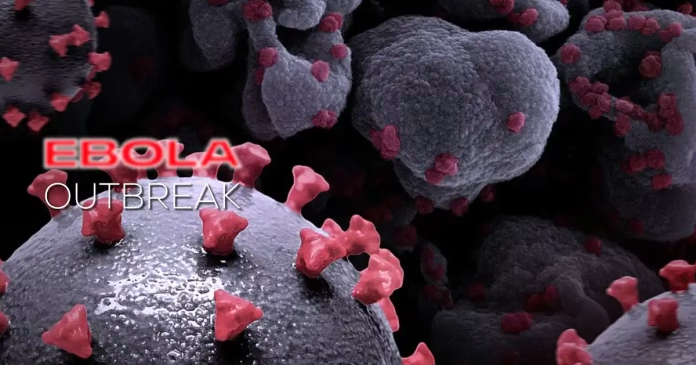
Geneva/Johannesburg – The World Health Organization has issued a sobering warning that the current Ebola outbreak containment efforts will require substantial time and resources, sending ripples of concern through African health ministries and international aid organizations. As the continent faces yet another public health emergency, the announcement underscores the fragility of healthcare systems across developing nations and the ongoing vulnerability of populations to infectious disease outbreaks.
The warning from WHO officials comes at a critical juncture when African nations, including South Africa, are still recovering from the economic and healthcare infrastructure damage inflicted by the COVID-19 pandemic. The statement emphasizes that rapid containment remains unlikely, with epidemiologists projecting months of intensive intervention before transmission chains can be effectively broken.
Understanding the Current Outbreak Dynamics
The latest Ebola outbreak has highlighted persistent gaps in epidemic preparedness across the African continent. According to WHO surveillance data, containment challenges stem from multiple factors including remote outbreak locations, limited healthcare infrastructure, community resistance to medical interventions, and cross-border population movements that facilitate viral spread.
Dr. Tedros Adhanom Ghebreyesus, WHO Director-General, emphasized during a recent briefing that Ebola outbreak containment requires a multi-faceted approach extending far beyond immediate medical response. “We must be realistic about timelines,” he stated. “Ebola containment is not a sprint but a marathon that tests every aspect of our health security architecture.”
The disease, which causes severe hemorrhagic fever with fatality rates ranging from 25% to 90% depending on the virus strain and quality of care, spreads through direct contact with bodily fluids of infected individuals. This transmission pattern makes containment particularly challenging in regions where traditional burial practices involve physical contact with deceased relatives.
Implications for Southern African Health Security
For South Africa and neighboring countries, the WHO warning carries significant implications. The Southern African Development Community (SADC) has activated regional health security protocols, with South African health authorities monitoring the situation closely despite no confirmed cases within national borders.
The National Institute for Communicable Diseases (NICD) has placed surveillance systems on heightened alert, particularly at ports of entry. Dr. Adrian Puren, Acting Executive Director of the NICD, confirmed that South Africa maintains diagnostic capacity for Ebola virus disease and has updated response protocols based on lessons learned from previous outbreaks.
Key concerns for the South African health sector include:
- Readiness of isolation facilities at designated treatment centers
- Adequacy of personal protective equipment stockpiles
- Training levels of healthcare workers in hemorrhagic fever protocols
- Coordination mechanisms with regional health authorities
- Public communication strategies to prevent panic while maintaining vigilance
- Border health screening effectiveness given South Africa’s status as a regional transport hub
South Africa’s relatively advanced healthcare infrastructure positions the country as a potential regional support center for outbreak response, but experts caution that complacency could prove dangerous. “We cannot assume geographic distance provides protection,” warned Professor Salim Abdool Karim, epidemiologist and former chair of the COVID-19 Ministerial Advisory Committee. “In our interconnected world, infectious diseases are always just one flight away.”
Resource Demands and International Response
The WHO’s acknowledgment that Ebola outbreak containment will take considerable time reflects the substantial resource requirements for effective epidemic control. International health organizations estimate that comprehensive outbreak response requires coordinated investment across multiple domains including medical supplies, laboratory capacity, contact tracing systems, community engagement programs, and healthcare worker deployment.
| Resource Category | Estimated Requirement | Current Gap | Priority Level |
|---|---|---|---|
| Personal Protective Equipment | 500,000+ units | 35% shortage | Critical |
| Vaccination Doses | 250,000 doses | 40% shortage | Critical |
| Trained Healthcare Workers | 2,000+ personnel | 50% shortage | High |
| Mobile Laboratory Units | 25 units | 60% shortage | High |
| Isolation Facilities | 50 treatment centers | 45% shortage | Critical |
Financial constraints remain a persistent obstacle to rapid outbreak response. Reuters reports indicate that international funding pledges often materialize slowly, creating dangerous gaps between outbreak declaration and resource deployment. This pattern has characterized responses to previous Ebola outbreaks, most notably the 2014-2016 West African epidemic that claimed more than 11,000 lives.
The African Union’s Africa Centres for Disease Control and Prevention (Africa CDC) has called for establishment of permanent rapid response mechanisms funded through sustainable continental financing rather than dependence on external donor commitments. Dr. John Nkengasong, Director of Africa CDC, argues that self-reliance in health security represents both a practical necessity and a matter of continental dignity.
Community Engagement and Cultural Considerations
Among the most complex challenges in Ebola outbreak containment are the cultural and social dimensions that influence disease transmission and control measure acceptance. WHO officials acknowledge that technical interventions alone cannot succeed without genuine community partnership and trust-building.
Previous Ebola responses have demonstrated that top-down approaches imposing external protocols on communities often generate resistance and drive transmission underground. Successful containment requires engaging traditional leaders, incorporating local knowledge systems, and adapting interventions to respect cultural practices while minimizing infection risk.
Anthropologists working with outbreak response teams emphasize that burial practices represent particular sensitivities. “We cannot simply tell communities to abandon traditions that have defined their relationship with death for generations,” explained Dr. Aisha Mbeki, a medical anthropologist advising health authorities. “We must work with communities to develop modified practices that honor their values while protecting the living.”
The WHO has invested in training community health workers and engagement specialists, recognizing that these frontline personnel often prove more effective than international experts in building local trust and compliance. This approach acknowledges that Ebola outbreak containment ultimately depends on millions of individual behavioral decisions made by community members.
South African health communicators are studying these engagement strategies, recognizing their applicability to future domestic health emergencies. The lessons from national COVID-19 responses demonstrated both the power and limitations of public health messaging in diverse, multilingual societies with varying levels of institutional trust.
Vaccine Development and Treatment Advances
Despite the sobering containment timeline, the medical toolkit available for fighting Ebola has improved significantly since earlier outbreaks. Two vaccines have received regulatory approval and demonstrated effectiveness in ring vaccination strategies, where contacts of confirmed cases receive immediate immunization to create protective barriers around infection clusters.
The Ervebo vaccine, developed by Merck, showed approximately 97.5% effectiveness in clinical trials conducted during the 2018-2020 outbreak in the Democratic Republic of Congo. A second vaccine, manufactured by Johnson & Johnson, provides additional options for expanded immunization campaigns. However, BBC Health correspondents note that vaccine supply remains limited and cold chain requirements present logistical challenges in remote outbreak zones.
Therapeutic treatments have also advanced, with monoclonal antibody therapies demonstrating ability to reduce mortality when administered early in disease progression. These treatments represent remarkable scientific achievements but remain expensive and require healthcare infrastructure that many affected regions lack.
South African researchers have contributed to Ebola medical countermeasure development, with institutions including the University of Cape Town and the University of the Witwatersrand participating in international research consortia. This involvement ensures African scientific expertise shapes global health security solutions while building continental research capacity.
Long-term Systemic Reforms Required
The WHO’s warning about extended containment timelines reflects not just the immediate outbreak dynamics but systemic weaknesses in global health architecture. Experts increasingly argue that recurring disease emergencies demand structural reforms rather than repeated crisis responses.
Proposed reforms include establishing permanent epidemic response workforces, creating regional medical stockpiles, strengthening laboratory networks, improving surveillance systems, and most fundamentally, investing in primary healthcare strengthening that builds population health resilience. These measures require sustained political commitment and financial investment that extends beyond emergency appropriations.
For developing nations including South Africa, the challenge involves balancing competing health priorities within constrained budgets. Finance Minister Enoch Godongwana has repeatedly emphasized fiscal pressures facing the government, with health spending competing against education, infrastructure, social grants, and debt servicing. Yet epidemiologists warn that underinvestment in health security ultimately proves far more expensive when outbreaks occur.
The economic costs of epidemic response extend beyond direct healthcare expenditure to include trade disruptions, tourism declines, agricultural impacts from labor shortages, and broader economic contractions from movement restrictions. World Bank analyses of previous Ebola outbreaks documented economic losses exceeding tens of billions of dollars across affected regions.
Public health advocates argue that framing epidemic preparedness purely as cost rather than investment misunderstands the economic calculus. “Every rand spent strengthening health systems returns multiple rands in prevented outbreak costs,” argued Professor Alex van den Heever, Chair of Social Security Systems Administration and Management Studies at the University of the Witwatersrand. “This is not charity but sound economic policy.”
Regional Cooperation and Continental Solidarity
The current outbreak has renewed calls for enhanced African regional cooperation in health security. The African Union’s New Public Health Order initiative, launched in response to COVID-19, aims to coordinate continental manufacturing of medical countermeasures, harmonize regulatory frameworks, share surveillance data, and mobilize rapid response teams across borders.
South Africa’s role in these continental initiatives carries particular significance given the country’s scientific capacity, manufacturing capabilities, and diplomatic influence. The establishment of vaccine manufacturing facilities in South Africa, supported by WHO technology transfer initiatives, positions the nation as a potential regional hub for medical countermeasure production.
However, translating policy frameworks into operational reality requires overcoming persistent challenges including funding gaps, coordination complexities, capacity constraints, and occasionally competing national interests. The principle of African solidarity confronts practical obstacles of uneven development, resource competition, and historical patterns of fragmented rather than coordinated responses.
As Ebola outbreak containment efforts continue in affected regions, the coming months will test both technical capabilities and political will. The WHO’s warning about extended timelines should not generate despair but rather catalyze the sustained commitment required for effective response. For South Africa and the broader continent, the outbreak represents both immediate challenge and opportunity for systemic transformation of health security architecture.
The lessons learned, systems strengthened, and capacities built through this response will shape Africa’s readiness for future health emergencies. Whether this outbreak becomes a catalyst for meaningful reform or another missed opportunity depends on decisions made not just in Geneva or affected outbreak zones, but in capitals, health ministries, and community halls across the continent.
Related: DRC Ebola Outbreak Crisis: 550 Cases Spark Continental Alarm

