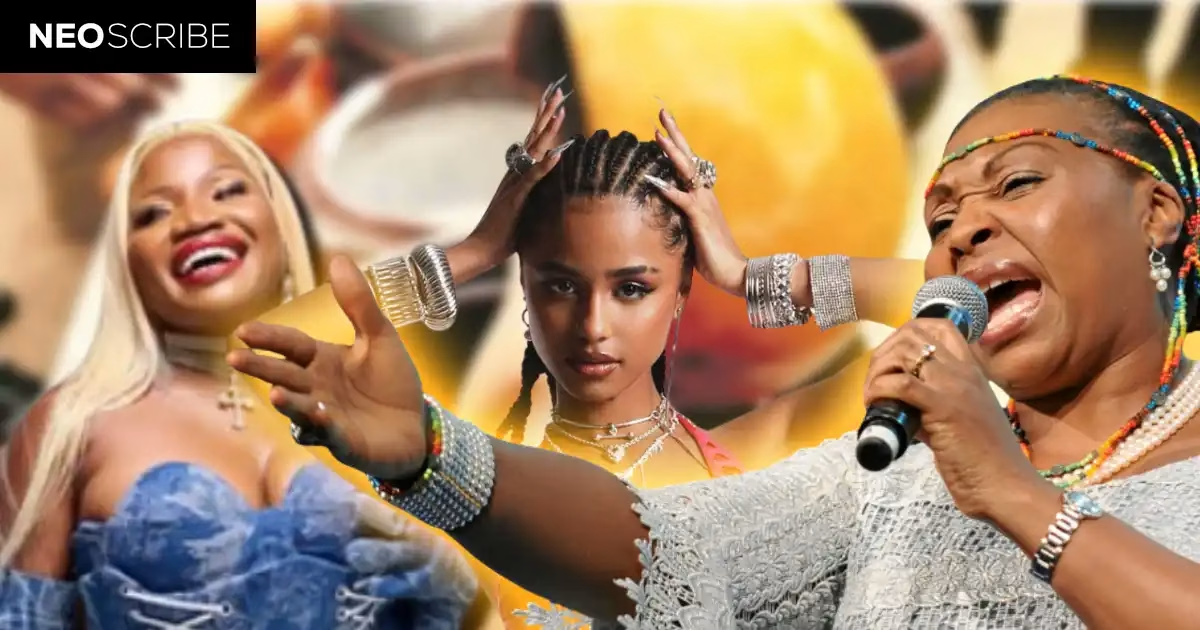
JOHANNESBURG — South African music is currently experiencing an unprecedented global renaissance, dominating international dance floors and red carpets alike. While names like Tyla and Makhadzi routinely capture headlines, industry analysts are looking backward to understand the blueprint of their success.
The DNA of modern South African pop stardom was written forty years ago by a nineteen-year-old girl from Tsakane: Yvonne Chaka Chaka.
A close comparative look at the “Princess of Africa” alongside modern powerhouses reveals a fascinating evolution of talent, industry survival, and structural triumph over vastly different social eras.
The Breakout Age: Teenage Prodigies and Grassroots Grinders
The age at which an artist rises to fame heavily dictates their initial industry experience. Yvonne Chaka Chaka burst onto the commercial scene in 1985 at just 19 years old with her debut single, “I’m in Love with a DJ”. Thrown into a ruthless, male-dominated recording industry as a teenager, she had to build acute business instincts rapidly to survive.
[Age 19] Yvonne Chaka Chaka (1985 Breakout)
 └── Physical distribution, state radio, severe physical policing.

[Age 21] Tyla (2023 Breakout)
 └── Algorithmic virality, borderless internet, hyper-scrutiny.

[Age 22] Makhadzi (2018 Breakout)
 └── Grassroots touring, regional dominance, bypassing mainstream gatekeepers.
In contrast, modern crossover titan Tyla hit global hyper-stardom at 21 years old when “Water” shattered streaming records. This two-year age gap might seem negligible, but the machinery behind a 21-year-old digital independent in the 2020s is vastly different from a 19-year-old navigating physical record labels in the mid-1980s.
Meanwhile, Limpopo’s hitmaker Makhadzi represents the slow-burn grinder model. She gained regional traction around 21 to 22 years old with “Tshanda Vhuya”, before exploding into national consciousness with “Matorokisi” in 2019. Makhadzi’s delayed mass breakout was a direct result of having to manually conquer geographic and cultural barriers without immediate major label backing.
Social Timelines: Physical Walls vs. Digital Cross-Examinations
The defining differences between these generations lie within the social and political timelines they had to navigate.
The Apartheid Sandbox (Yvonne Chaka Chaka)
Yvonne Chaka Chaka operated during the height of the late-Apartheid State of Emergency. Her timeline was characterized by severe physical restrictions. As a young black woman, her life was governed by racial segregation, travel passes (the Dompas), performance curfews, and strict state censorship via the SABC.
Exporting her music to the rest of the continent required navigating an international cultural boycott. Her triumph was a physical one—she physically crossed borders into West and East Africa, using live stadium touring to unite a divided continent.
Bypassing Tribal Gatekeeping (Makhadzi)
Makhadzi’s social timeline exists within democratic South Africa, yet she faced a different form of systemic isolation: linguistic and tribal gatekeeping. Singing predominantly in Tshivenda, she was routinely pushed to the fringes by Johannesburg-centric media houses that historically prioritized Nguni languages or English.
Furthermore, her timeline has been marred by highly publicized legal battles against former management teams—highlighting a modern era where young, independent black female artists still face intense financial and structural exploitation.
The Borderless Pressure Cooker (Tyla)
Tyla’s timeline is defined by the hyper-connected 2020s. While she bypassed the physical borders that restricted Yvonne, she occupies a digital panopticon. Her rise coincided with a hyper-fragmented internet culture where global audiences hold instant cross-examinations.
Tyla has had to navigate complex global discourse regarding her South African Coloured identity, frequently facing intense scrutiny from international commentators trying to force her heritage into Western racial boxes.
Media Evolution: From Vinyl Caravans to TikTok Algorithms
The structural media timelines of these icons highlight how the definition of “popularity” has shifted from tangible, localized community building to immediate, borderless consumption.
| Metric | Yvonne Chaka Chaka | Makhadzi | Tyla |
| Media Infrastructure | Vinyl, cassette tapes, analog radio. | Streaming platforms, YouTube, regional radio. | TikTok, global streaming algorithms, viral video. |
| Primary Audience Reach | Continental (Pan-African stadium tours) | Regional & Grassroots (Botswana, Zim, SA) | Global Mainstream (US, Europe, Asia, Africa) |
| Measurement of Fame | Physical record sales, stadium attendance. | High-frequency gigging, local streaming charts. | Billboard positioning, billions of social views. |
The Verdict: Different Battles, Same Royalty
Ultimately, comparing these eras proves that the difficulty level of the South African music industry hasn’t decreased; its coordinates have simply shifted.
Yvonne Chaka Chaka fought a brutal, oppressive physical regime to take South African pop to the world. Makhadzi broke down rigid linguistic barriers to prove that indigenous representation can command stadium-level corporate leverage. Tyla successfully weaponized internet infrastructure to place local flavors directly onto the world’s biggest stages, such as her confirmed performances for the upcoming 2026 FIFA World Cup opening ceremonies.
Whether dealing with the physical police states of the 20th century or the digital courtrooms of the 21st, South Africa’s female musical icons continue to prove that local authenticity remains the ultimate global currency.
This brief video profile highlights Yvonne Chaka Chaka’s 2026 recognition at the Forbes Woman Africa awards, detailing her multi-decade journey from a young pop star under apartheid to a global humanitarian icon.
Metric Wars: Yvonne VS Makhadzi
| Metric / Consideration | Yvonne Chaka Chaka (The Pioneer) | Makhadzi (The Modern Powerhouse) |
| Age at Rise to Fame | 19 Years Old (Broke out in 1985 with “I’m in Love with a DJ”) | 21–23 Years Old (Gained regional traction with “Tshanda Vhuya” in 2017, mass breakout with “Matorokisi” in 2019) |
| Social & Political Timeline | Mid-to-late 1980s under the Apartheid Regime. Black musicians faced curfews, police surveillance, strict internal passport laws (Dompas), and an international cultural boycott. | Late-2010s to Present in a Democratic SA, but marked by severe economic inequality, high youth unemployment, and high gender-based violence (GBV) rates. |
| Media & Tech Infrastructure | Analogue Era: Dependent on vinyl presses, state-controlled radio (SABC), and massive physical touring caravans to reach people across borders. | Digital Era: Algorithm-driven streaming, YouTube music videos, and Facebook/TikTok virality. |
| Core Hardships Faced | • Systemic Racism: State-enforced segregation restricted where she could perform or stay. • Political Isolation: Exporting her art out of a country undergoing an international embargo took incredible strategic maneuvering. | • Language Marginalization: Singing in Tshivenda meant facing immense pushback from major radio stations that historically favored English or Nguni languages. • Industry Exploitation: Publicly fought high-profile legal battles against former record labels over missing royalties and exploitative contracts. |
Metric Wars: Yvonne VS Tyle
| Metric / Consideration | Yvonne Chaka Chaka (The Pioneer) | Tyla (The Global Crossover) |
| Age at Rise to Fame | 19 Years Old (1985) | 21 Years Old (Broke out globally in 2023 when “Water” went viral on TikTok) |
| Social & Political Timeline | The State of Emergency in South Africa. Highly politicized, communal, and dangerous domestic environment. | The Hyper-Connected 2020s. Post-pandemic internet culture where international borders are practically invisible online. |
| Media & Tech Infrastructure | Word-of-mouth, physical tape swapping, and standard television appearances. | Global social media platforms (TikTok, Instagram, X) driving instant global trends. |
| Core Hardships Faced | • Physical Safety & Censorship: Writing songs that carried anti-apartheid undercurrents (like “Motherland”) meant risking state bans or arrest. • Gender Barriers: Navigating a heavily male-dominated, old-school record label landscape without any legal protections. | • The Internet Spotlight: Under constant global surveillance on social media; every statement, live vocal performance, or interview is scrutinized by millions in real time. • Identity and Crossover Debates: Faced exhausting public discourse from international audiences (particularly US social media) weaponizing American racial terminology against her South African Coloured heritage. |