
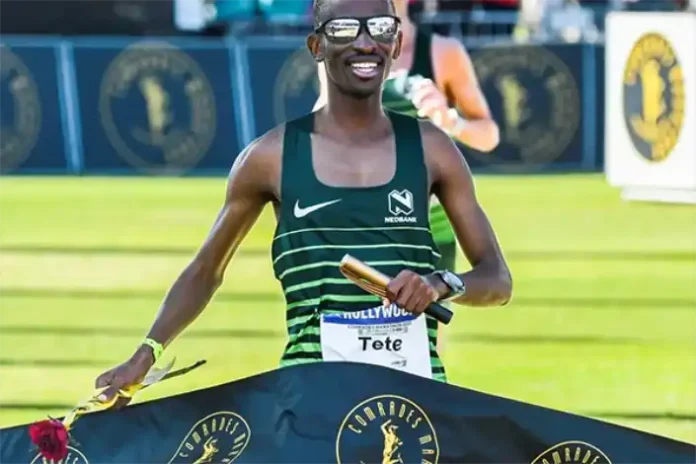
DURBAN – As South Africa’s most prestigious ultramarathon approaches, defending champion Tete Dijana has confirmed his intention to retain his title, making the Tete Dijana Comrades Marathon defence one of the most anticipated storylines, setting up what promises to be one of the most compelling races in the event’s storied 99-year history. The 32-year-old athlete’s announcement has electrified the running community, with thousands of competitors and millions of spectators preparing for the iconic 87-kilometre journey between Durban and Pietermaritzburg.
Dijana’s victory in the previous edition showcased not only his physical prowess but also his tactical acumen on one of the world’s most demanding ultramarathon courses. His decision to defend the crown comes at a crucial time for South African athletics, where local heroes increasingly face stiff competition from international runners while inspiring a new generation of distance athletes across the nation.
The Defending Champion’s Journey to Glory
Tete Dijana’s path to Comrades Marathon title glory represents a quintessentially South African success story. Hailing from the Eastern Cape, Dijana began his running career on dusty township roads, where natural talent combined with relentless determination transformed him into one of the country’s premier ultramarathon athletes. His breakthrough came after years of consistent performances in smaller races, where he honed the mental fortitude required to conquer the gruelling Comrades course.
During his championship run, Dijana demonstrated exceptional race management, maintaining a steady pace through the notorious “Big Five” hills before unleashing a devastating surge in the final 20 kilometres. His finishing time placed him among the elite performers in recent Comrades history, cementing his reputation as a serious contender for multiple titles. According to BBC Sport’s athletics coverage, ultramarathon running has experienced a global surge in popularity, with events like Comrades leading the way in showcasing endurance athletics.
The physical demands of defending a Comrades Marathon title cannot be overstated. Athletes must accumulate between 160 and 200 kilometres of weekly training, incorporating hill work, tempo runs, and recovery sessions while managing the risk of injury. Dijana has reportedly partnered with sports scientists and nutritionists to optimise his preparation, recognising that incremental improvements in training methodology can translate into crucial seconds on race day.
- Weekly training volume exceeding 180 kilometres during peak preparation
- Specialised hill training on routes mimicking Comrades terrain
- Strategic altitude training camps in Lesotho and the Drakensberg
- Advanced biomechanical analysis to improve running efficiency
- Personalised nutrition protocols for optimal energy management
The Competitive Landscape and Emerging Threats
While Dijana enters as defending champion, the field assembling for the 2026 Tete Dijana Comrades Marathon title defence represents one of the strongest in recent memory. South African athletics has produced a new wave of talented ultramarathon runners, many of whom view the Comrades Marathon title as the ultimate prize in domestic competition. These emerging athletes have studied Dijana’s racing patterns, identifying potential vulnerabilities they hope to exploit during the gruelling contest.
International competition has intensified significantly, with runners from Kenya, Ethiopia, Zimbabwe, and Lesotho increasingly viewing Comrades as a marquee event worthy of their best efforts. The prize money, prestige, and global recognition associated with victory have attracted world-class athletes who bring different racing strategies and physiological advantages to the iconic route. Reuters sports coverage has documented how African runners continue to dominate global distance running, with ultramarathons representing the latest frontier.
| Runner Name | Country | Best Comrades Time | Recent Form |
|---|---|---|---|
| Tete Dijana | South Africa | 5:28:34 | Excellent |
| Edward Mothibi | South Africa | 5:31:12 | Strong |
| Gift Kelehe | Lesotho | 5:29:45 | Improving |
| David Manja | Zimbabwe | 5:32:08 | Excellent |
| Gerda Steyn | South Africa (Women) | 5:49:46 | Record-breaking |
The tactical dimension of ultramarathon racing adds layers of complexity beyond pure physical capability. Runners must decide when to conserve energy, when to respond to surges, and how to manage nutrition and hydration across nearly six hours of continuous effort. Dijana’s experience as defending champion provides psychological advantages, but it also places a target on his back, with competitors eager to dethrone the reigning king.
Economic and Cultural Significance for South Africa
The Comrades Marathon title race carries profound economic implications for KwaZulu-Natal and South Africa more broadly. The event attracts approximately 20,000 runners and an estimated 250,000 spectators, generating substantial revenue for hotels, restaurants, transportation services, and local businesses throughout the province. According to economic impact studies, Comrades contributes over R500 million to the regional economy, making it one of South Africa’s most valuable sporting properties.
Beyond monetary considerations, Comrades represents an essential component of South African cultural identity. South Africa’s sporting spirit was on full display recently when Bafana Bafana faced Mexico in a bruising 2026 World Cup opener, proving the nation’s passion for athletics extends well beyond the marathon route. The race’s history intertwines with the nation’s own journey, having survived world wars, apartheid, and democratic transformation while maintaining its character as the “ultimate human race.” For many South Africans, Comrades transcends sport, embodying values of perseverance, courage, and the triumph of human spirit over seemingly insurmountable challenges.
The event’s democratic nature – where elite athletes like Dijana compete alongside amateur runners of varying abilities – reinforces its unique position in the national consciousness. Stories of ordinary South Africans completing the punishing course inspire communities across the country, demonstrating that extraordinary achievements remain accessible to those willing to commit fully to their goals. This inclusive ethos has helped Comrades maintain relevance across generational and demographic boundaries.
Recent developments in sports broadcasting have expanded Comrades’ reach significantly. International sports media now provide comprehensive coverage, introducing the race to global audiences while showcasing South African landscapes, culture, and athletic excellence. This exposure has tourism implications, with international runners increasingly adding Comrades to their bucket lists and extending their visits to explore the country’s attractions.
Training Philosophy and Scientific Preparation
Dijana’s approach to defending his Comrades Marathon title reflects the latest scientific understanding of ultramarathon physiology. Modern training methodologies emphasise periodisation, where athletes cycle through distinct phases focusing on base building, intensity development, race-specific preparation, and strategic recovery. This structured approach contrasts with earlier generations of runners who often relied primarily on accumulating massive weekly mileage without sophisticated planning.
Nutritional science has revolutionised ultramarathon preparation, with athletes now employing detailed carbohydrate loading protocols, mid-race fueling strategies, and post-workout recovery nutrition to optimise adaptation and performance. Dijana reportedly consumes approximately 4,500 calories daily during peak training, with macronutrient ratios carefully calibrated to support the enormous energy demands while maintaining optimal body composition for the challenging hills.
- Baseline aerobic development through consistent long runs at controlled paces
- Threshold training to improve lactate clearance and sustainable pace
- Hill-specific workouts replicating Comrades’ unique elevation profile
- Mental preparation including visualisation and race simulation
- Recovery protocols incorporating massage, physiotherapy, and adequate sleep
The psychological dimension of ultramarathon racing cannot be overlooked. The Comrades course presents multiple “crisis points” where runners must overcome profound discomfort, fatigue, and self-doubt. Sports psychologists working with elite athletes employ cognitive behavioural techniques, mindfulness practices, and mental rehearsal to build resilience and maintain focus during the inevitable difficult patches that occur during such extreme physical challenges.
Historical Context and Legacy Implications
Should Dijana successfully defend his Comrades Marathon title, he would join an exclusive club of back-to-back champions whose names resonate throughout South African athletics history. Multiple-time winners occupy legendary status, their achievements referenced whenever excellence in endurance sport is discussed. This historical dimension adds pressure but also provides motivation, as athletes understand they are competing not merely against current rivals but for a place among immortals.
The race’s founder, Vic Clapham, established Comrades in 1921 as a tribute to fallen soldiers from World War I, creating an event that would test human endurance while honouring those who made ultimate sacrifices. This commemorative purpose infuses the race with deeper meaning, reminding participants that their struggles, while difficult, pale in comparison to the hardships endured by previous generations. Many runners wear medals or carry mementos honouring deceased loved ones, transforming the race into a moving tribute.
Contemporary champions like Dijana carry responsibility as ambassadors for the sport and role models for aspiring athletes, a tradition shared by rugby greats whose profiles have equally inspired millions, as seen when Rassie Erasmus unveiled a massive 51-man Springbok squad to thunderous public reaction. Their conduct, training discipline, and public engagement influence how younger South Africans perceive athletics and physical achievement. In communities facing significant socioeconomic challenges, successful athletes demonstrate pathways to recognition and prosperity through dedication and talent development, making their visibility particularly valuable.
For more insights into South African sporting excellence, visit our comprehensive NeoScribe Sports coverage, where we track South African athletic excellence across all disciplines.
The Road Ahead: Race Day Scenarios and Predictions
As race day approaches, multiple scenarios could unfold depending on weather conditions, tactical decisions, and the inevitable unpredictability inherent in ultramarathon competition. A conservative early pace might preserve energy for a strong finish, but risks allowing aggressive competitors to establish insurmountable leads. Conversely, matching early surges could deplete glycogen stores, leading to catastrophic slowdowns in the final brutal kilometres.
Weather represents perhaps the most unpredictable variable. Comrades has been contested in scorching heat, torrential rain, and ideal cool conditions, with each scenario favouring different runner profiles and strategies. Dijana’s team will monitor forecasts obsessively, adjusting hydration protocols and pacing strategies based on expected conditions. Historical data suggests that temperatures exceeding 25 degrees Celsius significantly impact finishing times, while rain creates treacherous footing on descents.
The supporting cast surrounding elite athletes has expanded dramatically in recent years. Physiotherapists, nutritionists, coaches, sports psychologists, and biomechanics specialists form integrated teams aimed at extracting every possible performance increment. This professionalisation reflects ultramarathon running’s evolution from amateur passion to serious athletic pursuit, with corresponding investments in preparation and support infrastructure.
Regardless of the outcome, Dijana’s commitment to defending his Comrades Marathon title exemplifies the qualities that make the event special. The willingness to risk failure, to test oneself against formidable opposition, and to pursue excellence despite inevitable suffering captures the spirit that has sustained Comrades through nearly a century of South African history. When the starting gun fires, thousands of runners will embark on their personal odysseys, with Dijana’s battle for the championship providing dramatic focus for a event that celebrates human endurance in its purest form.
The 2026 edition promises to deliver another unforgettable chapter in Comrades mythology, with Tete Dijana positioned at the centre of the narrative. Whether he successfully defends his crown or passes the torch to a new champion, his participation ensures that South Africa’s ultimate ultramarathon will once again showcase athletic excellence, national pride, and the indomitable human spirit that defines this extraordinary race.
Image credit: Phenyo Mokgothu, NWU News

