
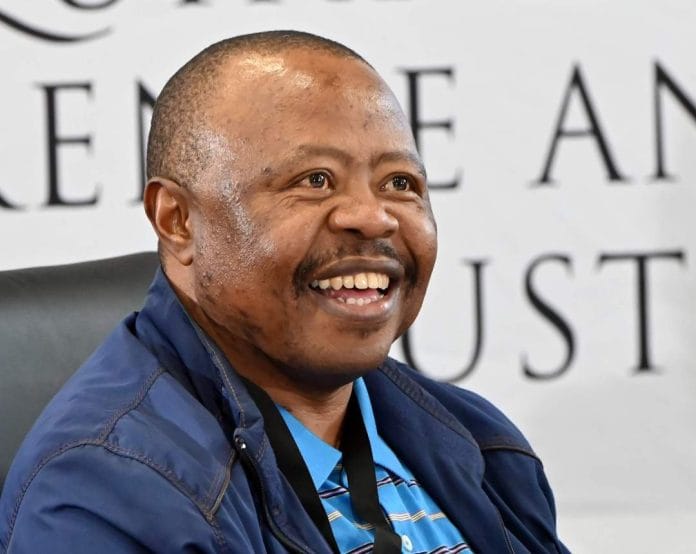
JOHANNESBURG – Gauteng Traffic Chief Samuel Mashaba has made his anticipated return to the Madlanga Commission of Inquiry, marking a critical juncture in one of the province’s most significant investigations into traffic law enforcement corruption. The seasoned traffic official’s reappearance before the commission signals an intensification of the probe into alleged systemic irregularities within Gauteng’s road traffic management apparatus.
Samuel Mashaba, who has led Gauteng’s traffic policing division through turbulent periods of administrative reform and public scrutiny, now finds himself at the centre of investigations that could reshape provincial law enforcement structures. The Madlanga Commission, established to examine allegations of corruption and maladministration within the Gauteng Department of Roads and Transport, has placed Mashaba’s tenure under the microscope alongside broader systemic failures — part of a wider pattern of government accountability failures across South Africa.
Background of the Madlanga Commission Inquiry
The Madlanga Commission of Inquiry was constituted following mounting public concern over corruption allegations within Gauteng’s traffic management systems. Named after its chairperson, the commission has been tasked with investigating a wide range of irregularities including fraudulent driver’s licence testing, bribery within traffic enforcement units, and procurement corruption involving traffic equipment and services. The fraudulent licensing dimension links directly to South Africa’s push to digitise licensing systems as a corruption deterrent.
Since its establishment, the commission has heard testimony from dozens of witnesses including traffic officers, administrative staff, service providers, and members of the public who have experienced or witnessed corrupt activities. The inquiry has exposed a complex web of corruption that has allegedly compromised road safety and undermined public trust in provincial law enforcement institutions.
Key areas under investigation include:
- Allegations of bribery and extortion by traffic officers during roadside stops
- Fraudulent licensing processes including irregular issuance of driver’s licences and vehicle registrations
- Procurement irregularities in the acquisition of traffic equipment, vehicles and technology systems
- Ghost employees and irregular appointments within traffic departments
- Mismanagement of revenue collected through fines and licensing fees
- Political interference in traffic law enforcement operations
According to Reuters reporting on South African corruption investigations, provincial commissions of inquiry have become critical mechanisms for accountability in governance structures where traditional oversight has failed.
Samuel Mashaba’s Role and Previous Testimony
As Gauteng Traffic Chief, Samuel Mashaba has occupied one of the province’s most critical law enforcement positions, overseeing thousands of traffic officers and administrative staff responsible for managing one of Africa’s busiest and most complex road networks. The position carries enormous responsibility for public safety, revenue collection, and the implementation of national and provincial road traffic legislation under the Road Traffic Management Corporation (RTMC) framework.
Mashaba’s previous appearances before the Madlanga Commission reportedly addressed operational matters and general departmental procedures. However, his return suggests that investigators have uncovered evidence requiring more detailed testimony or that new allegations have emerged since his last appearance. Sources familiar with commission proceedings indicate that Samuel Mashaba will face questioning about specific incidents, decision-making processes, and his knowledge of alleged corrupt activities within his command structure. Similar patterns of institutional corruption were recently exposed in the IPID drug operation controversy.
The Gauteng Traffic Chief’s tenure has coincided with significant challenges including:
- Deteriorating road safety statistics across the province
- Public complaints about aggressive and irregular traffic law enforcement
- Technological failures in licensing and traffic management systems
- Labour disputes and staff shortages within traffic departments
- Budgetary constraints affecting equipment and infrastructure maintenance
Observers note that while Samuel Mashaba faces scrutiny, the systemic nature of the alleged corruption suggests problems that extend far beyond any single official’s tenure or decisions. The commission must balance individual accountability with recognition of structural and institutional failures.
Broader Implications for Traffic Law Enforcement
The revelations emerging from the Madlanga Commission have profound implications for traffic law enforcement across South Africa. Gauteng, as the country’s economic heartland and most populous province, sets precedents that influence provincial administrations nationwide. Corruption in traffic management doesn’t merely represent financial malfeasance — it directly compromises road safety and costs lives. This probe also raises questions about procurement corruption patterns emerging across multiple government departments.
According to BBC’s coverage of African governance issues, corruption in traffic enforcement creates perverse incentives where officers prioritise revenue generation through harassment rather than genuine safety interventions. This erodes public trust and encourages non-compliance with legitimate traffic regulations.
| Impact Area | Consequence | Estimated Annual Cost |
|---|---|---|
| Road Safety Compromise | Unqualified drivers obtaining licences through fraud | R2.4 billion in accident costs |
| Revenue Loss | Diverted fines and licensing fees | R850 million |
| Procurement Fraud | Inflated contracts and substandard equipment | R1.2 billion |
| Public Trust Erosion | Reduced compliance with legitimate regulations | Unquantified but substantial |
The statistics paint a sobering picture of how corruption within a single provincial department can have cascading effects across multiple sectors including healthcare (accident treatment), insurance, productivity, and judicial systems.
Traffic corruption also disproportionately affects vulnerable and marginalised communities who lack the resources to navigate corrupt systems or challenge irregular enforcement. Small business owners, taxi operators, and working-class South Africans often bear the brunt of extortion and irregular traffic stops that have become normalised in some areas. This mirrors the systemic abuses documented in the SAHRC’s findings on government service delivery failures.
Legal and Constitutional Dimensions
The Madlanga Commission operates within South Africa’s constitutional framework for accountability and transparency. Provincial commissions of inquiry are established under the Commissions Act of 1947, which grants them substantial investigative powers including the ability to subpoena witnesses, compel testimony under oath, and recommend criminal prosecution.
However, commissions face inherent limitations. They can investigate and recommend but cannot prosecute or impose sanctions directly. Implementation of commission recommendations depends on political will, prosecutorial capacity, and institutional follow-through — areas where South Africa’s track record has been mixed at best. The National Prosecuting Authority (NPA) ultimately determines whether commission referrals translate into criminal charges.
Legal experts monitoring the Madlanga Commission emphasise several critical considerations:
- The commission must balance transparency with protecting the rights of individuals who may face criminal charges based on testimony
- Evidence gathered must meet standards that will support subsequent prosecution
- Recommendations must be practical and implementable within existing budget and capacity constraints
- Systemic reforms must address root causes rather than merely identifying individual wrongdoers
As Al Jazeera’s African affairs coverage has documented, the gap between commission findings and meaningful accountability remains a persistent challenge across the continent. South Africa’s State Capture Commission provided extensive evidence of corruption but prosecutions have proceeded slowly, raising questions about whether investigative commissions alone can drive meaningful change. Recent cases such as the Makgotloe bail judgement delays highlight how slowly the wheels of justice can turn.
Reform Prospects and Systemic Solutions
Beyond individual accountability, the Madlanga Commission presents an opportunity for comprehensive reform of Gauteng’s traffic management systems. Experts have identified several structural interventions that could reduce corruption vulnerabilities:
Technological Integration: Automated traffic enforcement systems reduce opportunities for discretionary and potentially corrupt human intervention. Digital licensing processes with biometric verification can eliminate many fraudulent practices currently plaguing the system, building on initiatives already underway to modernise South Africa’s digital licence disc system.
Transparency Mechanisms: Public disclosure of traffic fine revenue, licensing statistics, and departmental expenditure creates accountability through citizen oversight. Mobile applications allowing motorists to verify officer identity and report irregular conduct in real-time can shift power dynamics. The OpenUp civic technology organisation has championed such transparency tools in South Africa.
Independent Oversight: Establishing genuinely independent bodies to investigate complaints and monitor traffic department operations, insulated from political interference and departmental pressure, could restore public confidence.
Human Resource Reform: Competitive compensation, rigorous vetting, regular rotation of personnel, and merit-based advancement can reduce incentives for corruption while attracting higher-quality candidates to traffic law enforcement.
Integrated Case Management: Connecting traffic enforcement to judicial systems and creating complete digital trails for each case reduces opportunities for fines to be diverted or cases to disappear administratively.
According to Bloomberg’s analysis of African governance reform, technological solutions show promise but must be accompanied by political commitment and cultural change within institutions. Technology alone cannot overcome determined corruption if systemic incentives remain misaligned.
Public Response and Civil Society Engagement
The Madlanga Commission has galvanised civil society organisations, motorist associations, and anti-corruption activists who see the inquiry as a potential turning point for traffic law enforcement in Gauteng and beyond. Public hearings have been attended by community representatives sharing experiences of extortion, harassment, and irregular enforcement that have plagued motorists for years. Corruption Watch South Africa has actively documented cases of traffic officer misconduct that feed directly into the commission’s evidence base.
Civil society organisations have submitted detailed recommendations to the commission based on extensive research and community consultations. These submissions emphasise that corruption in traffic enforcement isn’t merely an administrative problem — it represents a fundamental breakdown in the social contract between government and citizens. The growing momentum of civic accountability campaigns in South Africa reflects this frustration.
However, public cynicism remains high. Many South Africans have witnessed previous investigations produce impressive reports but limited tangible consequences for those implicated. The commission’s ultimate legacy will depend not on the quality of its findings but on whether those findings translate into prosecutions, systemic reforms, and improved public services.
Looking Forward: Critical Questions
As Gauteng Traffic Chief Samuel Mashaba returns to face the Madlanga Commission, several critical questions will shape both the immediate inquiry and longer-term reform prospects:
Will the commission establish clear lines of accountability linking specific officials to corrupt activities, or will responsibility remain diffused across complex bureaucratic structures? Will recommendations be practical and implementable within existing resource constraints, or will they gather dust as aspirational documents divorced from operational reality? Political violence and intimidation remain real risks, as illustrated by the alarming political killings linked to accountability processes in South Africa.
Most fundamentally, will political leadership demonstrate the will to implement potentially uncomfortable reforms that may disrupt established patronage networks and challenge entrenched interests? And will prosecutorial authorities have the capacity and independence to convert commission findings into criminal accountability?
The answers to these questions will determine whether the Madlanga Commission represents a genuine inflection point in Gauteng’s governance or merely another episode in a frustrating cycle of investigation without meaningful consequence. For millions of Gauteng residents who navigate the province’s roads daily, and for the broader project of building accountable democratic institutions in South Africa, the stakes could not be higher.
Samuel Mashaba’s testimony may provide crucial insights into how corruption operates within traffic enforcement hierarchies, what systemic factors enable or constrain it, and whether leadership was complicit, negligent, or overwhelmed by challenges beyond any single official’s control. The nuanced reality is likely more complex than simple narratives of villainy or victimhood, requiring careful analysis and balanced judgment.
As the commission continues its work in coming weeks, public attention will remain focused on whether South Africa’s accountability institutions can deliver the transparency, justice, and reform that citizens deserve and that the constitution promises. For more coverage of South African governance and accountability issues, read our ongoing reporting on government corruption and South African news.

