
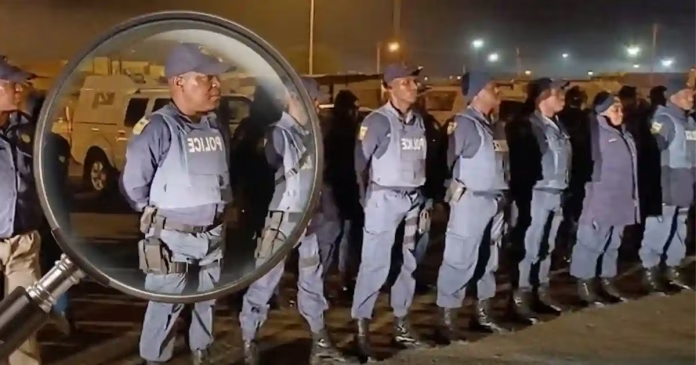
CAPE TOWN – The Independent Police Investigative Directorate (IPID) Executive Director continues to face mounting parliamentary pressure regarding a controversial IPID drug operation conducted in 2021, as questions about the agency’s operational protocols and accountability mechanisms intensify within South Africa’s oversight structures.
The ongoing scrutiny represents a critical moment for police accountability in South Africa, where the independence and effectiveness of oversight bodies remain central to public trust in law enforcement institutions. The repeated parliamentary questioning signals deeper concerns about transparency within the country’s police watchdog agency.
Background of the 2021 IPID Drug Operation
The 2021 drug operation in question has become a focal point for parliamentary committees examining the operational boundaries and investigative methodologies employed by IPID. While specific details of the operation remain subject to confidentiality protocols, the intensity of legislative interest suggests significant irregularities or procedural concerns may have emerged during or after the operation’s execution.
IPID, established under the Independent Police Investigative Directorate Act of 2011, holds a constitutional mandate to investigate specific criminal offences allegedly committed by members of the South African Police Service (SAPS) and Municipal Police Services. The directorate’s involvement in drug operations typically occurs when police conduct during such operations is alleged to have violated legal or ethical standards.
The fact that Executive Director Maphosho faces continued questioning suggests that initial explanations provided to oversight bodies have failed to satisfy parliamentary concerns. This pattern of repeated appearances before committees is relatively unusual and indicates either incomplete initial disclosures or evolving concerns as new information emerges.
Parliamentary Oversight and Accountability Mechanisms
South Africa’s parliamentary system provides multiple layers of oversight for entities like IPID. The Portfolio Committee on Police exercises direct oversight responsibility, while the Standing Committee on Public Accounts (SCOPA) may become involved when financial irregularities are suspected.
These accountability mechanisms serve several critical functions:
- Ensuring that constitutional bodies operate within their legal mandates
- Verifying that public resources are used appropriately and effectively
- Maintaining public confidence in institutions designed to provide checks and balances
- Identifying systemic problems that require legislative intervention
- Protecting whistle-blowers and ensuring transparent investigation processes
According to Reuters Africa coverage, oversight bodies across the continent have faced increasing scrutiny regarding their effectiveness and independence. South Africa’s relatively robust parliamentary committee system represents a democratic safeguard, but its effectiveness depends on cooperation from executive agencies and follow-through on recommendations.
Challenges Facing IPID’s Operational Independence
IPID has historically struggled with resource constraints, political interference allegations, and the complex challenge of investigating the very police services with which it must sometimes cooperate. The directorate’s budget and staffing levels have long been subjects of concern among civil society organisations monitoring police accountability.
The data illustrates the growing caseload facing IPID even as budgetary increases fail to keep pace with inflation and operational demands. This resource pressure creates environments where operational shortcuts or irregular procedures might occur, potentially explaining some of the parliamentary concerns surrounding the 2021 drug operation.
Dr. Gareth Newham, head of the Justice and Violence Prevention Programme at the Institute for Security Studies, has repeatedly highlighted that “IPID’s effectiveness as a watchdog depends entirely on its operational independence and adequate resourcing. When either element is compromised, the entire accountability ecosystem suffers.”
Implications for Police Accountability in South Africa
The continued questioning of IPID leadership over a single operation from 2021 carries broader implications for police accountability structures across South Africa. Public confidence in oversight mechanisms directly affects civilian willingness to report police misconduct and cooperate with legitimate investigations.
South Africa’s police service faces persistent challenges including allegations of brutality, corruption, and inefficiency. According to BBC reporting on South African policing, public trust in SAPS has declined significantly over the past decade, making effective oversight bodies more critical than ever.
When the oversight body itself becomes subject to questions about its operations, this creates a accountability vacuum with serious consequences:
- Reduced public willingness to file complaints against police misconduct
- Diminished deterrent effect on potential police criminality
- Weakened prosecution cases when IPID evidence is questioned
- Political exploitation of perceived oversight failures
Civil society organisations including the Helen Suzman Foundation and Section27 have consistently advocated for strengthened IPID independence and capacity. Their monitoring reports frequently highlight systemic challenges that individual operations like the 2021 drug operation may exemplify.
Legal and Procedural Questions Surrounding Drug Operations
Drug operations involving or investigated by IPID raise complex legal questions about jurisdiction, evidence handling, and the boundaries between proactive policing and oversight functions. IPID’s mandate primarily involves reactive investigation of alleged police misconduct, making its direct involvement in drug operations unusual unless specific misconduct allegations prompted the action.
Legal experts have noted that clarity regarding IPID’s operational scope remains essential for both effective oversight and legal certainty. When boundaries blur between investigation of police conduct and participation in operational policing, accountability mechanisms may be compromised.
The South African legal framework governing drug enforcement includes the Drugs and Drug Trafficking Act, the Prevention of Organised Crime Act, and various procedural criminal law statutes. Each creates specific requirements for evidence collection, warrant execution, and inter-agency cooperation. Violations of these procedures can result in evidence exclusion and case collapse, regardless of the underlying criminality involved.
According to Al Jazeera’s South Africa coverage, drug trafficking remains a significant challenge across the country, with sophisticated networks operating in major urban centres and rural areas alike. Effective enforcement requires both operational excellence and unimpeachable legal compliance—standards that oversight bodies must model.
The Path Forward for IPID and Police Oversight
Resolving the questions surrounding the 2021 IPID drug operation will require transparent engagement between the directorate and parliamentary oversight structures. The precedent established through this process will significantly influence future accountability interactions and public confidence in oversight mechanisms.
Several reform priorities have emerged from civil society and parliamentary discussions:
- Clearer operational protocols distinguishing IPID investigation from police operational functions
- Enhanced reporting requirements for unusual or high-risk IPID operations
- Improved resourcing to reduce pressure that might encourage procedural shortcuts
- Strengthened protection for IPID investigators from political or police interference
- Regular parliamentary reviews of IPID operational effectiveness and independence
The Minister of Police has constitutional responsibility for ensuring adequate resourcing and political support for IPID while respecting its operational independence. This delicate balance requires continuous calibration, particularly when specific operations generate parliamentary concern.
For South Africans concerned about police accountability, the current parliamentary process represents democracy functioning as designed—oversight bodies holding other oversight bodies accountable. While uncomfortable for those facing questions, this recursive accountability strengthens rather than weakens the overall system when conducted transparently and fairly.
Community policing forums, civil society watchdogs, and media organisations all play complementary roles in the broader accountability ecosystem. Their continued engagement, informed by developments like the ongoing IPID drug operation questions, helps maintain pressure for institutional improvement and transparency.
As this matter continues to unfold in parliamentary committees, South Africans should monitor not only the specific answers provided regarding the 2021 operation but also the systemic reforms that emerge from the process. Effective accountability systems learn from individual cases to strengthen overall institutional performance.
For more coverage of police accountability and governance issues, visit our South African news section.
The coming weeks will likely see additional parliamentary sessions as committees seek comprehensive answers about the IPID drug operation. Whether these sessions result in institutional strengthening or merely political theatre will depend on the commitment of all parties to transparency, accountability, and the rule of law—principles that remain foundational to South Africa’s constitutional democracy.

